
Edison, New Jersey
7 Lincoln Hwy, Ste 216, Edison, NJ 08820
(732) 538-8900
Would you like to save Edison, New Jersey as your Comfort Keepers location?
Call (732) 538-8900 | 7 Lincoln Hwy, Ste 216, Edison, New Jersey 08820
7 Lincoln Hwy, Ste 216, Edison, New Jersey 08820
Close

Are you interested in becoming a caregiver?
Apply Now »

Specialized Care
We create individualized plans of care for seniors based on their needs and personality.

Contact Your Office

Contact us today to learn more about how we can help.

Care Consultation

Schedule a free care consultation at your convenience.

The Science of Safe Recovery: Professional Post-Hospital Home Care in Edison, NJ

Call for a Virtual or In-Home Assessment

Research demonstrates that the initial 72 hours following hospital discharge represent the highest-risk window for preventable complications. During this critical period, patients navigate complex discharge instructions, new medications, mobility restrictions, and unfamiliar self-care routines—often while managing pain, fatigue, and emotional stress. The oversight, coordination, and personalized support provided during these first days can mean the difference between steady recovery and an unwanted readmission.

At Comfort Keepers, we specialize in bridging the gap between hospital discharge and independent living. Serving Edison, Woodbridge, New Brunswick, Perth Amboy, Metuchen, South Plainfield, Piscataway, Highland Park, Plainfield, Rahway, and Linden, our trained caregivers work alongside your medical team to ensure every aspect of your recovery unfolds safely and confidently.

Getting Care Started: Our Rapid Response Protocol

When your hospital discharge planner calls, our rapid response protocol activates immediately. We do not use an answering service—a real Comfort Keepers team member picks up the phone and begins coordinating your care on the spot. A dedicated scheduling coordinator is assigned to your case within the hour, gathering medical details, verifying insurance, and beginning the process of matching you with the right caregiver. Before services begin, we conduct a professional nurse assessment—a critical step that ensures your personalized care plan addresses your exact medical needs, home environment, and recovery goals.

For urgent situations—such as needing a trained companion present at the hospital during discharge, or immediate safety monitoring at home—we can arrange support on an accelerated timeline. For most standard discharges, expect your complete care program to launch within approximately one week of your initial call, once the nurse assessment is complete and the ideal caregiver is matched to your needs. Whether you need companionship and light assistance, full personal care and medication reminders, or transitional support while you rebuild strength, our team has the clinical expertise and scheduling capacity to get the right person in place efficiently.

Contact us today: (732) 538-8900

What Happens in Those Critical First 72 Hours

Our caregivers arrive with clear objectives and a methodical approach. On your first day home, we conduct a thorough walkthrough of your living space—checking for safety hazards like throw rugs, stairs, or poor lighting that could lead to falls. We review your discharge paperwork line by line, confirming medication names, doses, schedules, and any dietary restrictions. We note any special instructions from your surgical team, physical therapist, or nursing staff.

By day two, we establish routines. We set up your medications in an easy-to-access system, set phone reminders for doses, and watch for any adverse reactions. We help you shower safely, change dressings if needed, or manage incision care per your doctor's protocol. We monitor your vital signs and how you're feeling, documenting observations to share with your physician.

By day three, patterns emerge. We track your pain levels, sleep quality, appetite, and emotional state. We adjust our support based on what you're telling us. We coordinate with visiting nurses or physical therapists if they're part of your care plan. We ensure that any questions or concerns reach your doctor promptly. This first week is about building confidence and preventing the missteps that lead to complications.

Before You Leave the Hospital

Before discharge, the hospital discharge planner will typically connect with your family and our intake coordinator. This conversation covers your medical history, current condition, specific limitations, medication list, follow-up appointments, and living situation. We ask detailed questions about stairs, bathroom access, mobility aids needed, and family availability. We also clarify what your insurance covers and confirm the date and time you'll be discharged.

Your discharge summary—a critical document listing your diagnoses, procedures, medications, and restrictions—becomes our roadmap. We request a copy be sent to our office before your arrival so we can prepare specific supplies or instructions. If your hospital stay involved surgery, wound care, or monitoring for complications, we ensure our caregiver on day one has received that briefing.

Your First Day at Home

You arrive home—often tired, sore, and emotionally raw. A trained Comfort Keepers caregiver is waiting. Together, you settle in. We help you get comfortable, maybe in a recliner or bed where you can elevate your leg or rest your arm as needed. We unpack any equipment the hospital sent home—a walker, compression socks, an ice machine—and position it within arm's reach.

We then sit with you and methodically go through your discharge papers. Which medications do you take when? Which ones do you take with food? Are there activities you cannot do yet? Are there warning signs—increased swelling, fever, shortness of breath—you should call your doctor about? We write this down in plain English and post it somewhere visible.

We help with basic needs: a light meal if you haven't eaten, water to keep you hydrated, any pain medication at the scheduled time. We observe how well you can move, whether you need assistance walking, and whether your pain is manageable. If something seems off, we don't wait—we contact your doctor's office or nurse line.

Your First Week at Home

Days two through seven are about stability and prevention. We help with hygiene—baths or showers, depending on your restrictions. We prepare nutritious meals and ensure you're eating well, as proper nutrition accelerates healing. We encourage light movement as cleared by your doctor, and we watch for swelling, redness, or drainage from surgical sites.

We remind you of appointments, accompany you to the car, and report back to any visiting healthcare providers on how you're doing at home. If a therapist is coming to work with you, we observe and reinforce exercises when they're not there. We keep a daily log—not obsessive, but honest—of your progress, your mood, any concerns. This log becomes invaluable when you see your surgeon or physician for a post-discharge follow-up.

Whether you need care for a week or for the long term, we are here. We scale up or down based on your recovery arc. Many patients transition from around-the-clock support to a few hours a week as they regain independence. Others find that ongoing support provides the confidence they need to remain at home safely.


Condition-Specific Recovery Support

Joint Replacement and Orthopedic Surgery

Hip, knee, or shoulder replacement is a major procedure—one where the first weeks at home largely determine long-term mobility and quality of life. Our caregivers understand the phases of orthopedic recovery: the initial protective phase, the passive-then-active range-of-motion phase, and the strengthening phase.

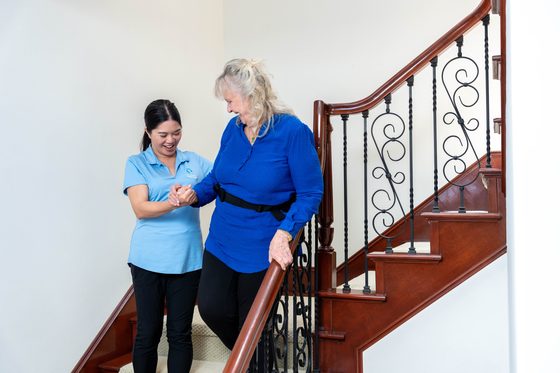
We ensure you use assistive devices (walkers, crutches, gait belts) correctly to prevent re-injury. We help you log ice and elevation time as prescribed. We observe your gait as it evolves, watching for compensation patterns that could create secondary problems. Many of our clients recovering from joint replacement at Robert Wood Johnson University Hospital and the nationally ranked JFK Johnson Rehabilitation Institute share how critical those first-week habits were to their final outcome.

We coordinate with your physical therapist, reinforce exercises at home, and report on your pain levels and swelling. We celebrate milestones—the day you can navigate stairs, the day you drive, the day you play with grandchildren again.

Stroke and Neurological Recovery

Stroke recovery is a marathon. Some deficits resolve in days, others improve slowly over months. Our caregivers are trained in the basics of stroke recovery: recognizing signs of a secondary stroke, supporting speech and swallowing exercises, assisting with mobility and balance, and managing the emotional toll of sudden disability.

We help you relearn daily tasks—dressing, bathing, cooking—working at your pace. We encourage the exercises your therapists prescribed and watch for signs of depression or anxiety, which are common post-stroke. We manage medication schedules carefully, as blood-thinners and blood-pressure medications are often adjusted in the weeks following stroke. For patients experiencing cognitive decline or memory-related challenges alongside their neurological recovery, our caregivers are trained in Comfort Keepers’ Positive Pathways program—an evidence-informed approach to dementia and cognitive care that uses structured activities, consistent routines, and individualized engagement strategies to preserve function and support dignity throughout the recovery process.

Cardiac Surgery and Recovery

A bypass, valve replacement, or heart attack recovery demands vigilance about activity levels, fluid intake, and warning signs. We monitor your chest for proper healing, watch your swelling and shortness of breath, and ensure you follow cardiac precautions—no heavy lifting, no pushing, no pulling for 6-8 weeks. We help you track your intake and output, especially if you're on a fluid restriction. We remind you about cardiac rehabilitation classes and support your return to activity as your cardiologist clears.

Other Surgical and Medical Conditions

From abdominal surgery to chronic illness management, our caregivers adapt to your specific situation. We support wound care, pain management, medication adherence, and the day-to-day tasks that become challenging during recovery. We communicate with your doctors and note anything unusual or concerning, ensuring you receive the right care at the right time.


Hospital and Rehabilitation Partnerships in Middlesex and Union Counties

We work regularly with discharge planners and social workers at the region's leading hospitals. This ongoing relationship means our intake team knows exactly how each facility structures discharge and which caregivers are best matched to specific cases.

Hospital Partners:

  • Robert Wood Johnson University Hospital (New Brunswick)

  • Hackensack Meridian Health JFK Medical Center (Edison)

  • Raritan Bay Medical Center (Perth Amboy / Old Bridge)

  • Overlook Medical Center (Summit)

  • Trinitas Regional Medical Center (Elizabeth)

  • Hackensack Meridian Health at Woodbridge

Rehabilitation Facility Partners:

  • JFK Johnson Rehabilitation Institute (Edison) – Nationally ranked orthopedic and neurological rehabilitation

  • JFK Hartwyck at Oak Tree (Edison)

  • JFK Hartwyck at Edison Estates (Edison)

  • Roosevelt Care Center (Edison)

  • CareOne at The Highlands (Edison)

  • Rose Mountain Care Center (New Brunswick)

  • Parker at New Brunswick

  • Parker at Piscataway

  • St. Joseph's Home (Woodbridge)

  • CareOne at East Brunswick

  • Merwick Care and Rehabilitation Center (Plainsboro)


Our Rapid Response Protocol: How Quickly Care Begins

The moment your discharge planner contacts Comfort Keepers, our intake coordinator begins assembling your care plan. We ask clarifying questions, verify your address, confirm insurance information, and identify which of our carefully vetted caregivers is the best clinical match for your situation. A scheduling team member is assigned to your case immediately—coordination starts the same day you call.

Step 1: Professional Nurse Assessment

Before any caregiver enters your home, a registered nurse conducts a thorough assessment of your medical condition, home environment, mobility limitations, and recovery goals. This evaluation is not a formality—it is the foundation of your individualized care plan and ensures the caregiver assigned to you has the precise clinical briefing needed to support your recovery safely.

Step 2: Caregiver Matching and Care Launch

Once the nurse assessment is complete, we match you with a caregiver whose skills, experience, and personality align with your needs. For most standard discharges, expect your full care program to be operational within approximately one week of your initial call. This timeframe ensures proper clinical evaluation, thoughtful caregiver selection, and thorough preparation—the factors that lead to better outcomes and fewer complications.

Urgent Situations: Accelerated Support

In certain circumstances—for example, if you need a trained companion present at the hospital during discharge, or if there is an immediate safety concern at home—we can arrange support on an accelerated timeline. Our rapid response capability means we always prioritize your safety while ensuring the quality and thoroughness of your care plan are never compromised. For families who want continuous around-the-clock presence without shift changes, we also offer live-in care—a single caregiver who stays in the home for extended periods. This is an especially effective option during the critical first weeks after hospitalization, when overnight monitoring and uninterrupted support can make the biggest difference in recovery outcomes.

Understanding the Difference: Medicare Home Health vs. Private-Duty Home Care

Many families ask whether Medicare will cover home care after a hospital stay. It is important to understand the distinction: Medicare home health provides limited skilled nursing visits and physical therapy—typically 2-3 visits per week for a defined period. It does not cover the daily personal care, companionship, meal preparation, medication reminders, light housekeeping, and around-the-clock presence that most recovering patients need.

Comfort Keepers provides private-duty home care—the essential daily support that fills the gaps Medicare does not cover. If you have a visiting nurse coming twice a week, we are there on the other days, or overnight, or during weekends. We coordinate seamlessly with your Medicare home health team, sharing observations about your progress and ensuring continuity between clinical visits and daily care.

Our services are paid for through long-term care insurance, VA benefits, or private pay—not through Medicare. We handle insurance verification and claims submission so you can focus on recovery, not paperwork.

Transparent Pricing and Payment Options

We believe in clear, upfront conversation about cost. During your intake call, we discuss your care needs, your preferred schedule, and what your insurance may cover. We provide a detailed estimate so there are no surprises.

How Families Pay for Care:

  • Long-term care insurance: This is the most common payment method for our clients. We submit claims directly to your insurer and handle the paperwork, reducing your out-of-pocket burden significantly.

  • VA benefits: If you are a veteran, Aid and Attendance benefits and other VA programs may cover eligible home care services. We help families navigate the VA process.

  • Private pay: We offer flexible scheduling and can work around your budget—hourly, daily, or weekly arrangements. Many families choose this option for short-term recovery support.


Why Families Trust Comfort Keepers for Post-Hospital Care

We are not a staffing agency that rotates strangers through your home. Our goal is maximum continuity—we minimize the number of caregivers assigned to your case so the people who show up know your routine, your preferences, and your personality. If your recovery requires multiple shifts, we work to keep the same caregiver on each shift visit after visit, so you build real trust with familiar faces. This consistency is especially important during the vulnerability of early recovery.

We invest in training and a proven care philosophy. Our caregivers are certified, background-checked, and regularly coached on best practices in post-hospital care. Central to our approach is Interactive Caregiving—a methodology where caregivers actively engage patients in their own recovery rather than simply performing tasks for them. Research supports that patients who participate in daily activities—helping prepare a meal, sorting medications with guidance, practicing mobility exercises—recover faster and regain independence sooner. This is not passive caregiving; it is a deliberate, clinically informed strategy that produces measurably better outcomes.

We are accessible—and we do not use an answering service. When you call Comfort Keepers, a real team member picks up the phone, not a recording or an outsourced call center. That person can begin scheduling your care immediately as part of our rapid response process. You are never left waiting for a callback or navigating a corporate voicemail maze.

We understand the region. We operate in Edison, Middlesex County, and surrounding areas, so we know the hospitals, rehabilitation facilities, physician practices, and community resources in your neighborhood. That local expertise translates into better coordination and faster problem-solving.

The Cost of Readmission and How We Help Prevent It

One in four Medicare patients is readmitted to the hospital within 30 days of discharge—a stunning statistic that reflects the vulnerability of the discharge period. Many readmissions are preventable: they result from missed medication doses, infections that went unnoticed, falls, or simply the chaos of trying to manage complex care alone at home.

Hospitals are penalized financially for preventable readmissions, which is why discharge planners are so eager to coordinate care like ours. When someone is at home with trained oversight, when medications are on schedule, when wounds are inspected daily, when patients move carefully and don't fall, and when problems are caught early—readmission rates drop dramatically.

By choosing Comfort Keepers, you're investing in your recovery and reducing your own risk of returning to the hospital. You're also easing the burden on the healthcare system and supporting the cost-control efforts of hospitals, insurance companies, and Medicare.

A Patient's Recovery Story

"I was terrified after my hip replacement. My daughter had to return to work, and I couldn't imagine managing stairs, medications, and ice therapy on my own. The Comfort Keepers caregiver who met me at home on discharge day was calm and organized. She walked me through everything—every medication, every restriction, every phase of recovery. She attended my physical therapy with me and made sure I did the exercises at home. Eight weeks later, I was walking without a cane and back to playing golf. I couldn't have done it without that support."

— Robert, Edison, recovering from hip replacement at Robert Wood Johnson University Hospital

From Recovery to Aging in Place: Care That Grows With You

Many families come to us for post-hospital recovery and discover something they did not expect: they want this level of support to continue. The caregiver who helped Dad through his first weeks home becomes the person he looks forward to seeing every morning. The safety net that started as a temporary measure becomes the foundation that allows him to stay in his own home for the long term. This is aging in place—and it is what Comfort Keepers was built for. Whether you need us for three weeks or three years, the care plan adapts as your needs evolve. There is no pressure to commit long-term, and no disruption if you decide to continue. The relationship simply grows.


Frequently Asked Questions

What happens when my parent is discharged from the hospital in Edison?

Your hospital's discharge planner will provide detailed written instructions and medications. They may also contact a home care agency like Comfort Keepers to arrange support at home. Our team will perform an intake assessment—gathering your medical history, medications, living situation, and insurance information. We'll coordinate a caregiver arrival time and ensure they're fully briefed on your specific needs and any limitations you're managing.

How quickly does Comfort Keepers’ rapid response process work in Middlesex County?

Scheduling coordination begins the same day you contact us—a team member is assigned to your case immediately. Before services start, we conduct a professional nurse assessment to build your individualized care plan. For most families, the complete care program launches within approximately one week of the initial call. In urgent situations—such as needing someone at the hospital during discharge—we can arrange support on an accelerated timeline. Our goal is to balance speed with the thoroughness that leads to safe, effective recovery support.

What is the difference between Medicare home health and private-duty home care?

Medicare home health is covered by Medicare for homebound patients whose doctors prescribe it. It typically includes nursing assessments, physical therapy, occupational therapy, and some skilled nursing care. Visits are usually limited to 2-3 per week and end when you're no longer homebound. Private-duty home care, like Comfort Keepers, fills the gaps: we provide companionship, personal care, medication reminders, meal preparation, transportation, and daily oversight. Many patients use both services together.

How does Comfort Keepers coordinate with hospital discharge planners?

Our intake team is trained to speak the language of hospital discharge. We ask the same detailed questions your discharge planner does. We request copies of your discharge summary, medication list, and any special instructions. We confirm the exact discharge date and time. We identify any complex medical needs and ensure the right caregiver is matched to your care. After you're home, we maintain open communication—sharing observations with your healthcare team and implementing any recommendations they make.

What types of post-hospital conditions does Comfort Keepers support?

We support recovery from virtually any condition: joint replacement, stroke, cardiac surgery, spinal procedures, cancer treatment, diabetes management, kidney or liver disease, chronic obstructive pulmonary disease, pneumonia recovery, and many others. Our experience and training span the full spectrum of post-hospital recovery. If your specific condition requires specialized knowledge, we bring it to bear.

How do families in Edison pay for post-hospital home care?

Most families pay through long-term care insurance (we submit claims directly to your insurer), VA benefits such as Aid and Attendance, or private pay with flexible hourly, daily, or weekly rates. We discuss all available options during intake and help you understand what each option covers. We can adjust care intensity to fit your budget and situation.

What should I look for when choosing a home care agency after a hospital stay?

Look for an agency that responds quickly to your needs, offers staff continuity (the same caregiver whenever possible), invests in training and certification, is known and trusted by local hospitals, provides transparent pricing, and—most importantly—listens carefully to what you need. Ask about their experience with your specific condition. Ask if you can meet the caregiver before care begins. Trust your gut: recovery is challenging enough without worrying whether your support team is reliable.

Ready to Start Your Recovery with Confidence?

Call Comfort Keepers today. We're standing by to answer your questions and arrange care that fits your needs.

(732) 538-8900

Whether you need care for a week or for the long term, we are here.