

A daughter-in-law in Brick called us a few days before her father-in-law was due home from the hospital, and she already knew exactly how it was going to go. "He's going to go home and be stubborn," she said, "and then two days later he's going to fall again." She was not being dramatic. He had done it the first time. He had promised the family he would let them take care of him, and then waved off every bit of help the moment he was back through his own door. "And then he's right back in rehab," we said, because we have watched that exact cycle more times than we can count. Breaking that cycle is the whole reason home care after a discharge exists.
Here is the most useful thing to know in that moment, and it is the thing families almost always learn the hard way. The smart first move after a discharge is to have help in place before your loved one walks back through the door, not to scramble once the fall has already happened. The first days home are the riskiest stretch of the entire recovery, and a little planning before the discharge date changes how the whole thing goes. We do this with families in Brick, Point Pleasant, Jackson, and Lakehurst every week, and the first call costs nothing.
It is not just our experience. The Agency for Healthcare Research and Quality's Re-Engineered Discharge research is blunt about it: the days right after a hospital stay are when an older adult is most likely to land right back in the hospital. A trained caregiver in the home through that window is one of the simplest ways to keep the second trip from happening.
The Shore's hospital corridor
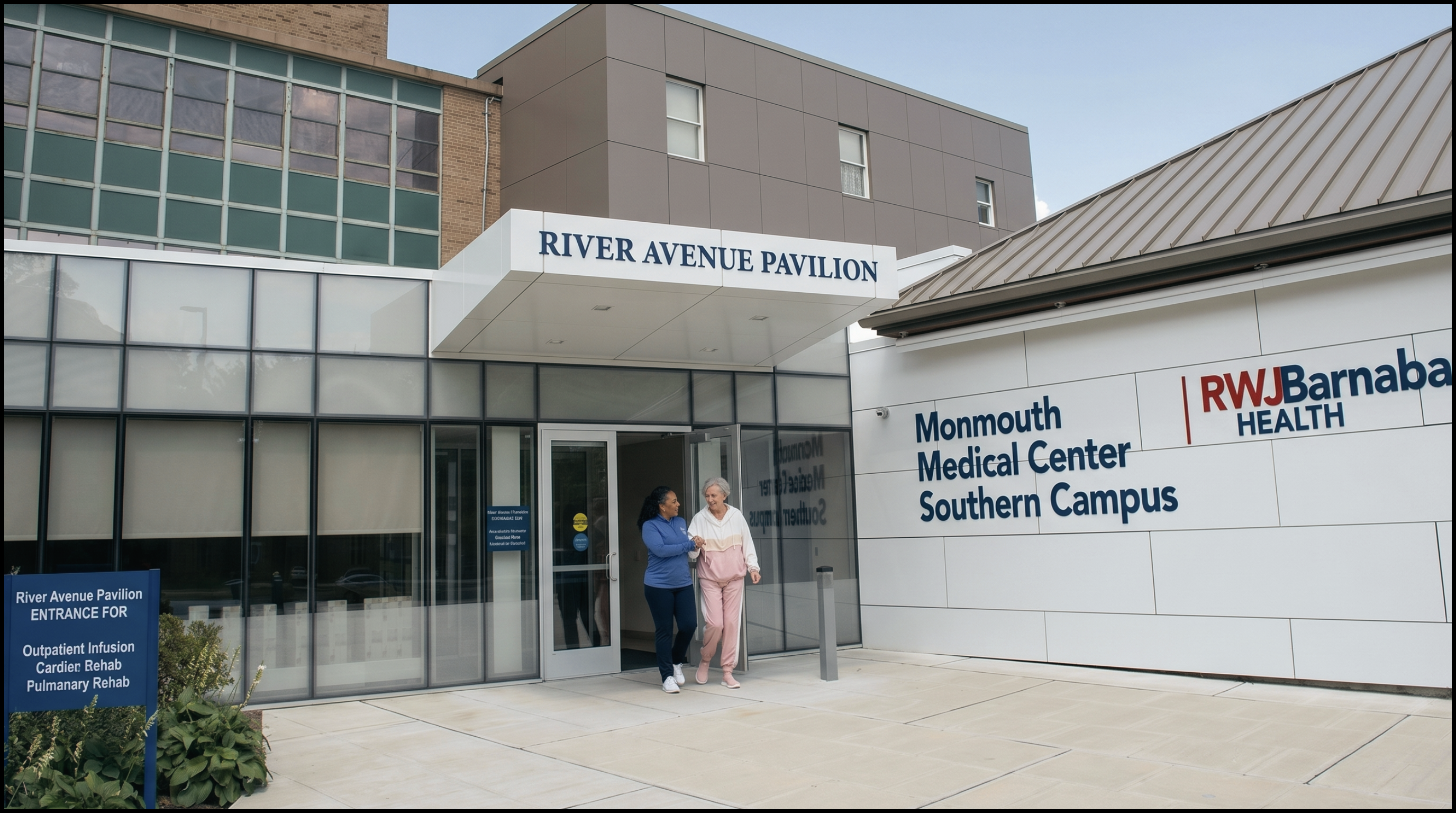
Ocean University Medical Center in Brick, Community Medical Center in Toms River, and Monmouth Medical Center Southern Campus in Lakewood handle a large share of the discharges around here. Some patients go straight home, some go through a rehab stay first, and some get pushed toward a longer-term facility before they are really ready for that. Which path is right depends on the surgery or illness, how your loved one was doing beforehand, and what kind of help is waiting at the house. The smoothest discharges, every single time, are the ones where the home is set up and a caregiver is lined up before the discharge date, not after.
Why home, and why so soon
Families sometimes ask whether home is even the right place after a rough hospital stay. Usually it is, and sooner than they expect. One daughter called us furious about how much her mother had slipped in the hospital, sharp going in and confused coming out. "She's starting to lose it," she told us. "She'd do better in her own home." She was right. Being in a familiar place, your own bed, your own kitchen, the same routine at the same time of day, genuinely helps people heal and clears the hospital fog faster than another week in a strange building. A caregiver's job is to make home safe enough that the recovery can actually happen there.
What the first days home really take
The discharge paperwork covers the basics. Weight-bearing limits. The new medications. Wound care. The warning signs that mean call the doctor. What it does not cover is how your father gets from the bed to the bathroom at 2 a.m. on a walker he has used for two days. It does not cover who is in the house when your sister goes back to work on day three. It does not cover the meals he will not bother to make for himself.
A trained caregiver covers exactly those gaps: getting up and moving safely, bathing around a healing incision, meals, light housework, and rides to outpatient therapy and back. They do not give medications, but they set out the morning pills and remind your loved one to take them, and they keep a steady eye on the warning signs the doctor flagged. The whole job is to get your loved one through the fragile first weeks without a fall and without a bounce-back to the hospital.
Matching the help to the home
How much care a family needs comes down to who is home and where the risk is. Sometimes it is just the nights. The Brick family above started with an overnight caregiver, because their father was steady enough by day but a real fall risk getting up alone in the dark, and it let everyone finally sleep instead of lying awake listening for a thud down the hall.
Sometimes the family is simply worn out. A son-in-law called us about his 86-year-old father-in-law, home from the hospital and unable to bear his own weight, with his 82-year-old wife trying to help him transfer every few hours. They were starting to get hurt doing it. His one worry about bringing someone in was a fair one, and he said it straight: "the thing that always worries me with these services is your dependability and turnover." That is exactly the right question to ask. Our answer is the part families do not see until they need it: an on-call team that checks every evening that caregivers are at their assignments, and if someone cannot make it, you hear from us, not the other way around. The family gets to go back to being a family instead of an exhausted two-person nursing crew.
And sometimes it is the hardest version of all. A daughter told us she could not bring her father into her own home to care for him, and the guilt sat heavy in her voice. The reason was that she was in the middle of her own fight. "I'm battling cancer myself," she said. "It's pancreatic." There is nothing to feel guilty about in a moment like that. Bringing in trained help so your father can recover in his own home is not giving up on him. It is taking care of him, and it is taking care of you, which you have to do to be any good to anyone.
How a Brick-area family gets started
Your dedicated Client Care Coordinator runs the day-to-day. For families on the Shore, that is often our dedicated Client Care Coordinator, Paula Fleming, who matches the caregiver, sets the schedule, and is who you call from the hospital parking lot when the discharge time suddenly moves up a day. Our seasoned Director of Nursing, Brittany Minervini, RN, does the in-home Assessment and writes the Plan of Care when the situation calls for it, and she can do it right at the hospital or rehab so the care is ready the day your loved one comes home. After we talk, we send you a written preliminary plan based on what you told us, so you can see exactly what the first weeks would look like before you commit to anything.
We have worked with the discharge teams at the Brick and Toms River hospitals for many years, and we can often start within a few days of the discharge, faster when the case is urgent and a caregiver is available. It does take a little lead time, though. Getting the right caregiver is not like ordering a pizza off a shelf, so the first call, even before the discharge date is set, is the moment to start the clock.
What this costs
Cost depends on the level of care and the schedule, and there is no weekly minimum, so a family can start with just the overnights or just a few hours a day and add more only if they need it. After we talk it through, we will give you a cost over the phone. Long-term care insurance covers home care for many families, and we file the paperwork and take an assignment of benefits so the carrier pays us directly. Veterans and surviving spouses may qualify for VA Aid and Attendance benefits; the va.gov Aid and Attendance page explains eligibility. Medicare does not pay for ongoing non-medical home care. WinnJam has been doing this work in Monmouth and Ocean County since 2001.
Frequently Asked Questions
How soon should we start home care after a discharge?
The first three days home are when most families realize they need help, so the best time to call is before the discharge, not after. If the discharge planner at Ocean University Medical Center or Community Medical Center flagged any concern, line up care before your loved one leaves. We can sometimes start within a few days of the first call when the case is urgent.
What if my parent insists they do not need help?
That is one of the most common things we hear, and it is exactly the situation that leads to the second fall. We start small and low-pressure, often framed as a little help around the house rather than care, and our nurse can come at no charge to meet your parent, which sometimes lands better than family saying it. The resistance usually fades once a familiar face is part of the routine.
Can we get someone just for the nights?
Yes, and after a discharge it is one of the most common ways families start. When the daytime is manageable but a fall getting up in the dark is the real fear, an overnight caregiver covers the risky hours so the rest of the household can sleep.
Does Medicare cover this?
Medicare does not pay for ongoing non-medical home care. Long-term care insurance often does, and we bill the carrier directly when the policy allows. VA Aid and Attendance helps eligible veterans and surviving spouses.
How long do most families need care after a hospital stay?
The heaviest help is the first couple of weeks. Many families step the hours down as their loved one gets steadier, and a good number stop entirely once recovery is solid. We would rather see you need us less, not more.
What towns does the Shrewsbury office cover in this area?
Brick, Point Pleasant, Lakehurst, Jackson, and Lakewood, plus Monmouth County towns like Red Bank, Middletown, Holmdel, Freehold, and Wall.
Let's have a conversation
If your loved one is coming home to Brick, Point Pleasant, Lakehurst, Jackson, Toms River, or anywhere on the Shore after a hospital stay, call us at (732) 530-3636. The consultation is no-cost, and there is no obligation. My staff and I have these conversations every day. We will listen, give you a straight answer about the level of care that fits, and send you a written plan so you can see how the first weeks would work. Our work is to elevate the human spirit, one home and one family at a time.