

24-Hour Home Care in Monmouth County
A husband called us on a Saturday night. His wife had been in the hospital for a month, and that afternoon the staff told him she was going home the next day. He uses a wheelchair himself. "We're not ready," he said. We set up overnight care on that same call.
That's how a lot of 24-hour care starts. Something changes fast, and all of a sudden nobody can be alone at night. Our office on Broad Street in Shrewsbury has served families in Red Bank, Tinton Falls, Middletown and the rest of Monmouth and northern Ocean County since 2001. Call us at (732) 530-3636.
What 24-hour home care means
24-hour home care means a caregiver is awake and working in the home at every hour, including overnight. No one can safely work 24 hours in a row, so the day is split into two or three shifts. That takes more than one caregiver over a week, and we keep the group as small as we can so the faces stay familiar.
Every caregiver we send is a Certified Home Health Aide. New Jersey requires at least 76 hours of training for that certification, and we add our own training on top.
Medicare doesn't pay for it. Medicare's own site lists "24-hour-a-day care at your home" as something it does not cover (Medicare.gov).
Who needs someone awake all night
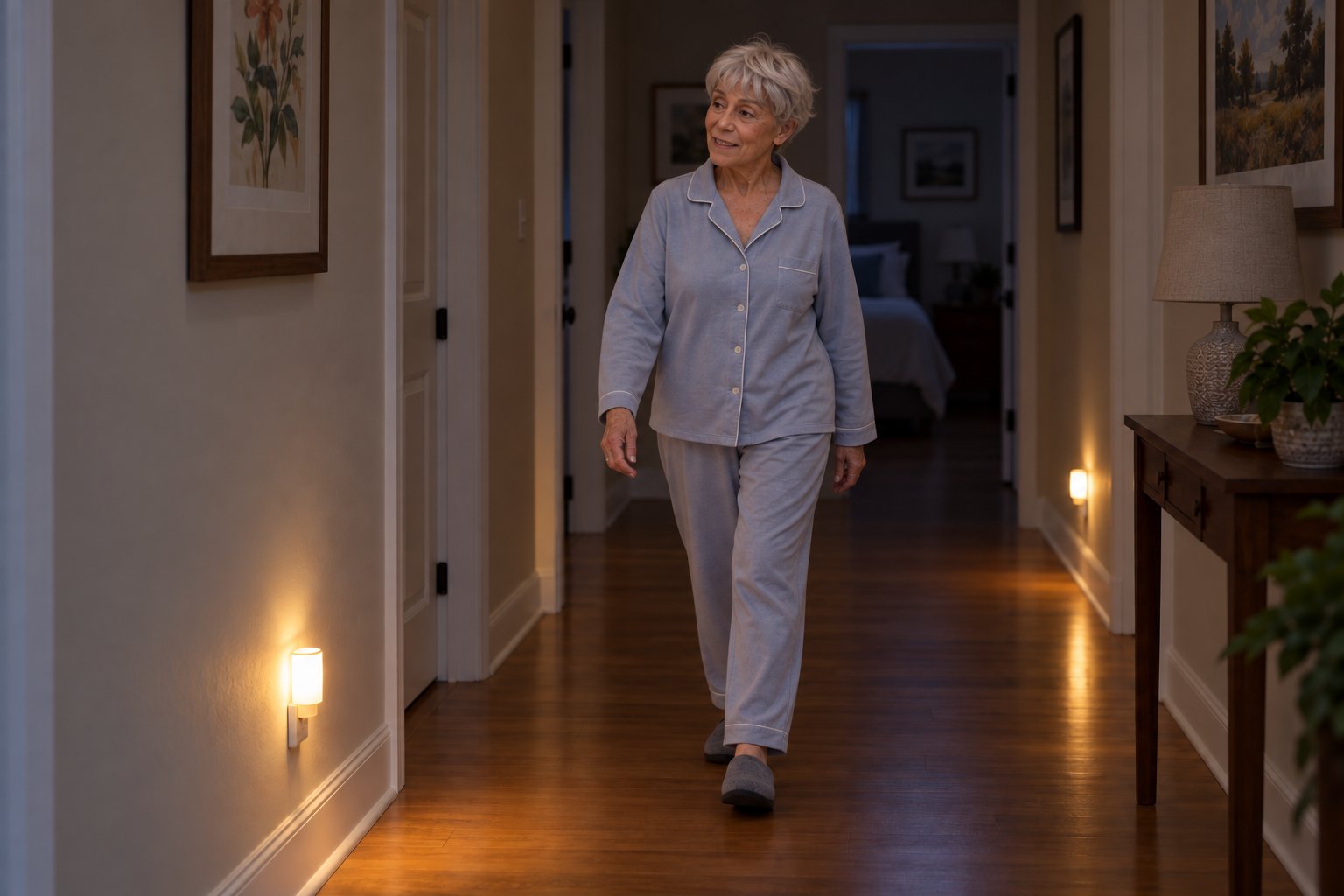
24-hour care fits when the nights are unsafe, not only the days.
Dementia that gets worse after dark. Dementia can cause "waking up often, and wandering or yelling at night," according to the National Institute on Aging. The Alzheimer's Association says six in 10 people living with dementia will wander at least once. A caregiver who is asleep can't stop someone heading out the door at 3 a.m. Our company follows the Positive Pathways approach to dementia care, and we are certified in it. More on our dementia care page.
Parkinson's. Stiffness, getting up to use the bathroom, a fall on the way down the hall. For many people with Parkinson's, the nights are the hard part. Our office is PMD Alliance certified in Parkinson's care, and our nurses bring that training to the caregivers.
The first nights home from the hospital. Coming home from Monmouth Medical Center in Long Branch or CentraState in Freehold, the first nights are often the hardest. Round-the-clock help for a short stretch can get someone through it, and then we step the hours down. See our post-hospital care page.
The end of life. Hospice handles the medical side and sends a nurse to visit. Families still need someone there at 2 a.m. Our caregivers do the hands-on work so the family can sit with the person. More on our end-of-life care page.
The person doing the caring is worn out. A woman called us from pre-op. She was about to have heart surgery, and she had been caring for her husband around the clock for 11 years. A lot of calls start that way. The person needing care didn't change. The person doing the caring ran out.
A caregiver awake all night lowers the chance of a fall. It doesn't take it to zero.
Ask about a live-in before you book three shifts
A live-in is often the better choice, and it costs much less than 24-hour shifts. A live-in is one caregiver who stays in the home, takes breaks during the day (off duty) and sleeps at night. She stays a minimum of 7 days to start and usually works about six weeks before a relief caregiver covers a few days off.
If nights are the problem, a live-in can still work. We add an hourly caregiver overnight while the live-in sleeps, and that still costs less than three shifts.
That's why one of our first questions on the phone is why you think you need 24-hour care. Read more on our live-in care page.
Only the nights? Some families do fine during the day and only need someone overnight. Overnight-only shifts are common. They let the family member who has been up every night get some sleep, and it's a form of respite care.
Who you'll deal with
Kyra, who handles our intake, takes the first call. From that call she sends a written preliminary care plan, so you can see what care would look like before anyone comes out.
Our experienced Director of Nursing, Brittany Minervini, RN, sees the home before the first shift and sets up the Plan of Care. A nurse checks in at least every 30 days, and the plan is redone every 60 days.
With 24-hour care, every shift has to be covered. We employ our caregivers, so if one calls out sick in the middle of the night, finding someone is our job, not yours. Roxanne and Paula, our Client Care Coordinators, run the schedule. When anything needs to change, you call them.
There's no long-term contract. We ask for 24 hours' notice to change a shift and 5 days to stop care.
Paying for 24-hour home care
24-hour care is the most expensive way to get care at home, because every hour is paid. Call us and we'll give you a cost based on what's needed.
Most families pay privately or with long-term care insurance. If a policy covers it, we can bill the insurer directly. Many wartime veterans and surviving spouses qualify for the VA Aid and Attendance benefit. We are a private-pay agency and don't work through Medicaid or state programs.
Towns we cover
More than 1 in 5 Monmouth County residents is 65 or older.
Source: U.S. Census Bureau QuickFacts, 2025 estimate.
We provide 24-hour care from Red Bank, Rumson and Little Silver to Holmdel, Freehold, Spring Lake, Brielle, Point Pleasant, Brick, Lakewood and Jackson.
Common questions about 24-hour home care
What's the difference between 24-hour care and live-in care?
24-hour care uses shifts, so a caregiver is awake at every hour. A live-in is one caregiver who stays in the home and sleeps at night. A live-in costs much less, and we can add an overnight caregiver if nights are hard.
Does Medicare pay for 24-hour home care?
No. Medicare does not cover 24-hour-a-day care at home. Most families pay privately or use long-term care insurance or the VA Aid and Attendance benefit.
How fast can 24-hour care start?
It depends on the hours and who is available. We have set up overnight care during the first phone call. Call us and we'll tell you what we can do.
Can we start with just overnights?
Yes. Many families do. Overnight shifts give a worn-out family member a chance to sleep and keep the person safe at night.
Will it be the same caregivers every day?
With two or three shifts, it takes more than one caregiver. We keep that group small and consistent, and the Client Care Coordinator makes the schedule.
What if a caregiver calls out sick?
We cover the shift. We employ our caregivers, so a call-out is our problem to solve.
Call us at (732) 530-3636. If 24-hour care isn't the right fit, we'll tell you what is.