

Your Family's Partner Through Recovery: Compassionate Post-Hospital Home Care in Shrewsbury, NJ

 Call for a Virtual or In-Home Assessment
When the hospital says your parent or spouse can go home, the relief you feel is often mixed with worry. You are grateful recovery can continue in familiar surroundings. But you are also aware that discharge is not the same as being out of the woods. The first days at home bring new anxieties: Will they manage their medications? Can they safely get around? What if something goes wrong in the middle of the night? That is the feeling most families describe—and that is exactly whereComfort Keepers steps in.
Since 2003, we have partnered with families across Monmouth County, northern Ocean County, and beyond to provide peace-of-mind support after hospital discharge. Whether your loved one is recovering from stroke at Jersey Shore Medical Center, surgery at Monmouth Medical Center, or cardiac care at CentraState, our team stands ready to bring expertise, compassion, and round-the-clock presence into your home. You are not alone in this journey—we are here to shoulder the burden.
Whether your elderly loved one is being discharged from Jersey Shore Medical Center or Monmouth Medical Center, our post-hospital senior care ensures a smooth transition home. Families in Red Bank, Middletown, Holmdel, Tinton Falls, and across the region trust our elderly care team to be there from the moment their loved one walks through the door — reducing readmission risk and supporting a faster, safer recovery.
Our Rapid Response Commitment to Your Family
The moment discharge is scheduled, families often feel time pressure. You have a job to return to. Children to pick up from school. A household to manage. And now you are trying to arrange care for a recovering loved one with days—sometimes hours—notice. This is where our responsiveness matters most. When you call Comfort Keepers, you will not reach an answering service or a voicemail tree—a real team member picks up the phone and begins working on your case that same conversation. Call us when you know the discharge date, and we will handle the logistics.
We have worked with Monmouth County hospitals long enough to understand that every family’s timeline is different. The moment you call, a member of our team begins working on your schedule—we do not put you on a waiting list. Before placing a caregiver in your home, we arrange a nurse assessment to truly understand your loved one’s condition, home environment, and needs. This step ensures the care plan is built around your family, not a template. In certain urgent situations—for instance, if you need someone present at the hospital during or right after discharge—we can arrange support on a faster timeline. Most families see their complete care program begin within about a week of first contacting us, allowing time for the assessment, the right caregiver match, and thorough preparation. For families who want someone there around the clock without shift transitions, we also offer live-in care—a caregiver who stays in the home for extended stretches. Many families find this is the ideal arrangement during those first critical weeks after discharge, when overnight presence and unbroken continuity bring the greatest peace of mind.
Call today and let us talk about your situation: (732) 530-3636
Imagine This: Your First 72 Hours Home
Discharge morning arrives. Your father walks out of the hospital with a discharge packet stuffed with instructions he did not fully absorb. He is tired. His body aches. He just wants to be home. A Comfort Keepers caregiver meets you both there. She does not rush. She helps him get settled—to a comfortable chair, a good bed, wherever makes sense. She reviews the paperwork with you both, line by line. She answers questions. She points out the things to watch for: signs of infection, medication side effects, when to call the doctor.
By day two, your father has a routine. His caregiver helps him shower, prepares his meals, reminds him when it is time for pills. She takes his blood pressure. She notices he is not sleeping well and reports it to you. You call the doctor's office together and learn it is normal, but here is what might help. Your father starts to relax. He is not alone. Someone trained is watching.
Day three, a physical therapist arrives for a scheduled visit. The Comfort Keepers caregiver sits in, takes notes, learns what exercises your father should do at home. Between therapy visits, she reinforces them. Your father's confidence grows. He goes from 'I am terrified' to 'I think I can do this.' That shift—from fear to possibility—is what those first three days are about. And it happens faster, smoother, and more safely when professional support is there.
Before the Hospital Doors Close Behind You
The hospital's discharge planner will reach out to you—and to us—before your loved one leaves. This conversation is crucial. We learn about their condition, what happened during their hospital stay, what limits they are facing now, and what they are supposed to do at home. We ask practical questions: Do you have stairs? A shower or tub? Someone to be there day and night, or just during certain hours? Do you have other family members involved, or is this mostly on you?
We also ask about your loved one's personality, habits, and preferences. Is she a talker or quiet? Does he like music, television, or silence? What foods does she enjoy? These details matter because caregiving is not just about medical tasks—it is about presence, dignity, and connection. The better we understand your loved one as a person, the better the match we can make.
Coming Home: The Caregiver Is Waiting
Your loved one arrives home—maybe in an ambulance, maybe with you driving. Whatever the journey, a trained Comfort Keepers caregiver is there waiting. She greets you warmly. She helps move slowly from the car or ambulance to the house. She knows about any mobility issues: if your mother cannot use stairs yet, the caregiver helps her settle downstairs. If your husband needs to keep his leg elevated, the caregiver sets up the couch with pillows and a footrest. If pain management is critical, she has the medication schedule ready.
Then she sits down with all the paperwork. The discharge summary. The medication list. The call-your-doctor-if warning signs. She reads aloud. She writes things down. She asks your loved one, 'Do you understand?' and 'Do you have questions?' She understands that brain fog and medication effects make it hard to absorb information in the hospital—but it is clearer at home, in a calm setting, with someone giving full attention.
She helps with the first dinner at home. Maybe it is something simple—broth, juice, soft food if eating is limited. Maybe it is your usual meals, modified for any dietary restrictions. Either way, it is familiar, it is nourishing, and your loved one does not have to think about it. You can be present with your family. You do not have to be the doctor or the nurse today. You can just be the daughter, the son, the spouse.
The First Week: Building Stability
Days two through seven are about establishing what normal looks like. If your loved one had a stroke, the caregiver helps with speech exercises, balance practice, and the emotional support stroke survivors desperately need—because stroke often steals not just mobility, but confidence and independence. If surgery was involved, the caregiver watches the incision, ensures proper hygiene, and catches any signs of infection before they become problems.
The caregiver is also your eyes and ears. She notices your mother is not eating as much as she should. She reports that your father's pain seems worse in the evenings. She mentions that your wife seems anxious or sad. These observations, shared with you and your doctor's office, are preventive medicine. Catching issues early—before they spiral into complications—is the whole point.
Whether you need care for a week or for the long term, we are here. Some families discover that post-hospital support transitions smoothly into ongoing help as their loved one ages. Others find that intensive first weeks set them up for independence. Either way, we are not here to push you out the door—we are here to support whatever journey your family is on.
Condition-Specific Recovery Support
Stroke Recovery: The Emotional and Physical Journey
A stroke changes everything overnight. Families we work with describe it as going to sleep and waking up in a different body. Your parent cannot move their left side. Your spouse cannot find the words. The person you knew is still there—but trapped behind a body that will not cooperate. Coming home after stroke means learning to move again, to speak again, to regain independence in daily tasks that once seemed automatic.
Our caregivers are trained in stroke recovery. They understand the physical progression: how weakness can improve, how speech can return (sometimes unevenly), how balance must be relearned carefully to prevent falls. But they also understand the emotional toll. Depression and anxiety are common after stroke. Our caregivers notice when your loved one seems withdrawn. They encourage activities. They celebrate small wins: standing for 10 seconds longer today than yesterday, saying a word a little more clearly, walking a few feet farther down the hall.
Many of our stroke recovery clients came home from Jersey Shore Medical Center, where their medical team is exceptional. We coordinate closely with their speech, physical, and occupational therapists. We reinforce the techniques they teach. We watch for complications like swallowing difficulties and report immediately. For loved ones experiencing cognitive changes or early signs of dementia alongside their recovery, our caregivers are trained in Positive Pathways—Comfort Keepers’ specialized approach to dementia and cognitive care that emphasizes dignity, engagement, and meaningful daily routines. We are the bridge between therapy sessions and daily life—the presence that keeps recovery moving even on the hard days.
Orthopedic Surgery and Joint Recovery
Hip replacement, knee surgery, shoulder repair—orthopedic procedures are common, but recovery is unforgiving if handled carelessly. A fall, the wrong movement, premature weight-bearing, or insufficient physical activity can set back progress weeks. Our caregivers understand the phases: the protected phase (when nothing happens by accident), the progressive phase (when controlled movement returns), and the strengthening phase (when real independence blooms).
We ensure your loved one uses assistive devices correctly. We watch gait carefully, looking for limping patterns that could damage the healing joint or create pain elsewhere. We manage ice, compression, and elevation religiously—because swelling is the enemy of progress. We escort your parent to physical therapy and follow up with the exercises prescribed, doing them at home on the therapy days you cannot be there.
Cardiac Care and Heart Disease Management
Whether it is a heart attack, bypass surgery, valve replacement, or heart failure management, cardiac recovery is about caution and gradual progress. Your loved one must follow strict activity limits initially. Medications are numerous and timing-sensitive. Diet is restricted. And the psychological component—fear of the next event, anxiety about exertion—is profound. Our caregivers create a safe structure. They know which activities are allowed and which are not. They monitor for warning signs: unusual shortness of breath, chest discomfort, swelling, fatigue.
Other Medical Conditions and Recovery Scenarios
From cancer treatment recovery to spinal surgery, from pneumonia convalescence to management of chronic diseases, we have supported families through nearly every post-hospital scenario. Our flexibility and training allow us to adapt to your unique needs. If your loved one requires wound care, medication management, mobility assistance, or simply the reassurance of having someone trained present—we are equipped and ready.
Partnership with Monmouth County's Finest Healthcare Facilities
We are proud to coordinate care with the discharge teams at major hospitals across Monmouth County and into northern Ocean County. These relationships mean smooth handoffs, clear communication, and discharge planners who know us personally and trust us with their patients' post-hospital needs.
Hospital Partners:
Jersey Shore Medical Center (Neptune) - Hackensack Meridian Health
Monmouth Medical Center (Long Branch) - RWJBarnabas Health
Monmouth Medical Center Southern Campus (Lakewood) - RWJBarnabas Health
Riverview Medical Center (Red Bank) - Hackensack Meridian Health
CentraState Medical Center (Freehold)
Bayshore Medical Center (Holmdel) - Hackensack Meridian Health
Ocean University Medical Center (Brick) - Hackensack Meridian Health
Community Medical Center (Toms River) - RWJBarnabas Health
Rehabilitation Facility Partners:
Encompass Health Rehabilitation Hospital of Tinton Falls
Encompass Health Rehabilitation Hospital of Toms River
Complete Care at Shrewsbury
Meridian Nursing and Rehab at Shrewsbury
Redbank Center for Rehabilitation and Healing
The Manor Health and Rehabilitation Center (Freehold)
Tower Lodge Care Center
Allaire Rehab and Nursing (Freehold)
Atlantic Coast Rehabilitation and Healthcare Center (Lakewood)
Hackensack Meridian Nursing and Rehab - Red Bank
How Quickly Can We Get Your Family the Support You Need?
Our rapid response commitment means that when the discharge planner contacts us—or when you call directly—we begin coordinating your care that very day. A scheduling team member is assigned to your case immediately. But we also believe in doing this right, not just fast. Before any caregiver enters your home, a nurse conducts a thorough assessment of your loved one’s condition, medications, mobility, and home environment. This assessment is what allows us to build a care plan that truly fits your family’s situation.
For most families, the complete care program—assessment, caregiver matching, and first visit—is in place within about a week of your initial call. If there is an urgent need, such as requiring a companion at the hospital or immediate safety monitoring at home, we can arrange support on a faster timeline. The goal is always your family’s comfort and confidence, with care that is thorough from the very first day.
Call to discuss your timing: (732) 530-3636
How Does Comfort Keepers Assess Your Needs?
Before we place anyone in your home, we conduct a careful assessment. A member of our team will meet with you—either at your home or by phone—to understand your loved one's condition, your home environment, your family's availability, and your specific needs and concerns. This conversation helps us match the right caregiver and establish clear expectations.
We ask about mobility, medication management, dietary needs, any special equipment, and family involvement. We want to know: What time do medications get taken? Can your loved one bathe independently or do they need help? Are there stairs? Are there physical or cognitive limitations we should know about? Do you want the caregiver to prepare meals, do light cleaning, provide companionship, assist with medical tasks? The more we understand, the better we serve.
How We Work with Your Healthcare Team
Post-hospital care is a team effort. Your doctor, any visiting therapists, your hospital's follow-up nurses, and your family are all part of the equation. Comfort Keepers is the glue holding it together. We attend discharge summaries and briefings. We coordinate with visiting nurses and therapists. We report observations to your family and your doctor's office. If we notice something unusual, we do not assume it will go away—we escalate it.
This level of coordination is especially valuable if your loved one sees multiple doctors (a cardiologist and a primary care doctor, for instance) or has multiple medications. We maintain a current medication list, flag any concerns, and ensure consistency in care. Many physicians tell us that Comfort Keepers' observations from the home setting are invaluable—we catch things that do not surface in a 15-minute office visit.
Paying for Post-Hospital Care: Your Options
Long-term care insurance
This is the most common way families pay for our services. If you have a long-term care insurance policy, it very likely covers in-home care. We are experienced with submitting claims and working with insurance companies. Call us with your policy information and we will verify benefits and handle the paperwork on your behalf. This can significantly reduce your out-of-pocket costs during post-hospital recovery.
VA benefits for veterans
If your loved one is a veteran, they may be eligible for VA Aid and Attendance benefits or other programs that cover home care services. We help families navigate the VA process and can guide you through the application. Call us with your military service information and we will walk you through what is available.
Private pay with flexible options
Comfort Keepers works with families on payment. We offer flexible hourly rates, daily packages, weekly bundles, and overnight options. We can scale care based on your budget: maybe it is 24-hour coverage for the first week, then evening and overnight after that, then just weekends by week four. We discuss your financial situation openly and find a solution that makes sense.
What about Medicare?
Medicare covers limited skilled nursing visits and therapy after hospitalization—but it does not cover the daily personal care, companionship, meal preparation, and around-the-clock presence that most recovering patients need. Comfort Keepers provides private-duty care that fills those gaps. If your loved one has a Medicare home health nurse visiting a few times per week, we are there on the other days, ensuring continuity and safety. Our services are paid through LTC insurance, VA benefits, or private pay—not Medicare.
Why Families Choose Comfort Keepers for Peace of Mind
Continuity. Our goal is to minimize the number of caregivers your family sees. When your loved one needs care across multiple shifts, we work to assign consistent caregivers to each shift—so the person who comes in the morning and the person who comes in the evening are each familiar faces your family knows and trusts. They learn your father’s habits, preferences, medical history, and personality. This consistency is therapeutic in itself, especially for someone vulnerable after hospitalization.
Training and Interactive Caregiving. Our caregivers are not just kind—they are educated and certified. They understand post-hospital recovery, recognize warning signs, follow protocols, and communicate effectively with your medical team. What sets us apart is our Interactive Caregiving philosophy: our caregivers do not simply do things for your loved one—they engage your loved one in their own recovery. Whether it is encouraging participation in meal preparation, involving them in light physical activity, or keeping their mind active through conversation and problem-solving, this approach has been shown to improve outcomes and restore confidence faster. Your loved one is in the hands of someone who knows what they are doing—and who believes recovery is something you do together.
Accessibility. When you call our Monmouth County office, there is no answering service—a real team member picks up and can begin scheduling your care during that very conversation. If you have a question, a concern, or need to adjust care, you reach someone who knows your family and your situation. We are responsive and genuinely invested in your recovery journey.
Regional expertise. We know Monmouth County's hospitals, rehab facilities, doctors, and resources intimately. That local knowledge translates into better coordination and faster problem-solving. You are not working with a national franchise—you are working with neighbors who understand your community.
Preventing Hospital Readmission: The Real Goal
One in four Medicare beneficiaries returns to the hospital within 30 days of discharge. Many of these readmissions are avoidable: they stem from medication errors, missed appointments, infections that went unnoticed, or falls. When someone is home alone managing complex recovery, these mistakes happen.
Comfort Keepers reduces readmission risk. How? By being there. By watching for signs of infection or complications. By ensuring medications are taken on time. By helping prevent falls and injuries. By encouraging nutrition and movement. By catching problems when they are small and reportable rather than waiting until they are emergencies. Our clients have significantly lower readmission rates because someone trained is present, paying attention.
Hospitals recognize this value. Discharge planners reach out to us because they know we reduce their readmission penalties. Insurance companies recognize it because preventing a hospital readmission saves thousands. But most importantly, your family recognizes it: you avoid the trauma and disruption of another hospitalization, and your loved one stays home where recovery happens faster and better.
A Family's Story: Recovery After Stroke
My mother had a stroke. One minute she was independent. The next, she could not move her left side and could barely speak. The hospital said she was stable for discharge after three weeks of rehab, but my wife and I both worked. I was terrified she would fall or have another stroke and we would not be there. We called Comfort Keepers. They placed Linda, a caregiver, immediately. She came into our home like a second mother to my mom. Linda did the hard things—the bathing, the exercises, the patience—and she also did the small things, like braiding her hair and playing her favorite music. My mom had hope. And frankly, so did I. Knowing Linda was there gave me peace of mind to go to work. Six months later, my mom is speaking clearly, walking with just a cane, and joking again. Linda helped make that possible.
— Michael, Shrewsbury, whose mother recovered from stroke at Jersey Shore Medical Center
When Temporary Care Becomes Home for Good
Here is something we see time and again: a family calls us because Mom is coming home from the hospital and needs help for a few weeks. Three months later, Mom is recovered—but the family realizes that having a trusted caregiver in her life has changed everything. She is safer, happier, more social, and more confident. The temporary arrangement quietly becomes a permanent one, and Mom gets to age in the home she loves instead of moving to a facility. This is aging in place, and for many of the families we serve across Monmouth County, it becomes the most important decision they make. There is never any pressure—you start with what you need today, and if your family decides to continue, we are already there.
Questions Families Ask Us Most
How quickly can Comfort Keepers arrange care after my parent’s hospital discharge?
We begin scheduling coordination the day you call—a team member is assigned to your case right away. A nurse assessment is conducted before care starts, ensuring the plan is tailored to your loved one’s needs. Most families have their full care program running within about a week. For urgent needs—like needing someone at the hospital or immediate safety support—we can move on a faster timeline. We understand that waiting is stressful, and our rapid response approach is designed to balance speed with the thoroughness your family deserves.
Will a caregiver come to assess my loved one before care begins?
Absolutely. Before any caregiver enters your home, we conduct an assessment—either in person or by detailed phone conversation—to understand your loved one's condition, your home, and your family's needs. This ensures the right match and sets clear expectations.
Can home care help prevent my parent from being readmitted to the hospital?
Yes, significantly. Constant oversight catches complications early. Medication reminders prevent errors. Help with movement prevents falls. Nutritional support speeds healing. When someone trained is present, readmission risk drops dramatically. That is why hospitals work with us.
Will Comfort Keepers work with my parent's Medicare home health team?
Absolutely. We coordinate seamlessly with visiting nurses, therapists, and other healthcare providers. We reinforce what they teach, observe progress, and report observations back to your medical team. We complement Medicare coverage rather than competing with it.
Can I use long-term care insurance to pay for post-hospital home care?
Yes. If you have a long-term care insurance policy, it likely covers home care. We verify your benefits, submit claims directly to your insurer, and handle the paperwork. This often significantly reduces what you pay out of pocket.
Will Comfort Keepers help with medication management after discharge?
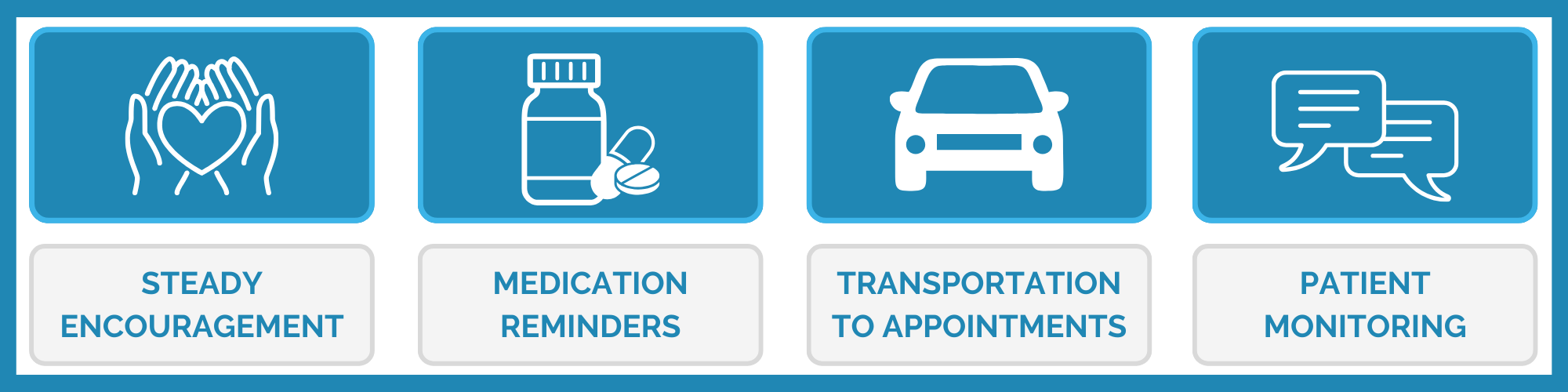
Yes. We set up medication reminders, organize pills in easy-to-use systems, watch for side effects, and ensure doses are taken on schedule. Medication management is one of the most critical aspects of post-hospital care, and it is something we handle carefully every day.
Can you provide overnight or 24-hour care during the first week home?
Yes. Many families want intensive support immediately after discharge. We can provide 24-hour care, overnight-only care, or evening-and-night coverage depending on your needs and budget. We scale care as your loved one improves.
Let's Talk About Your Family's RecoveryEvery family's situation is unique. Call us and we will listen, understand, and help you plan post-hospital care that fits your life. Whether you need care for a week or for the long term, we are here. |
RN-Led Post-Hospital Care — What Makes Us Different
The transition from hospital to home is one of the most critical moments in a senior’s recovery. At Comfort Keepers of Shrewsbury, our Registered Nurse can meet your family right at the hospital or rehab facility — coordinating directly with discharge planners at Hackensack Meridian Riverview Medical Center, Monmouth Medical Center, and Central State Medical Center to develop a post-discharge care plan before your loved one comes home. The RN conducts a home safety assessment before arrival, ensuring the home is ready for recovery. Once home, the nurse checks in every 30 days, develops a new plan of care every 60 days, and can attend follow-up doctor’s appointments to ensure recovery stays on track. This nurse-led coordination helps prevent hospital readmission — one of the biggest risks facing seniors after discharge.
Call (732) 530-3636 for a no-cost RN consultation about post-hospital care for your loved one.







