

Caring for Yourself While You Provide Senior Care for Others
Self-care for family caregivers
Whether it's a spouse or a parent, caring for a loved one can be a rewarding experience that brings your family together. However, ignoring the feelings of loss, stress, and physical and emotional strain that come with this kind of family caregiving isn’t healthy.
We’ve created this informational guide to help you maintain emotional and physical well-being while providing senior care for your loved one. The good news is that taking care of yourself will enable you to better care for your loved one.
Understanding compassion fatigue
What is compassion fatigue?
Compassion and empathy are natural traits in a caregiver, and it’s not uncommon for family caregivers to feel that their capacity for helping their parent or spouse is nearly limitless. However, you can’t perform Herculean feats of senior care without caring for yourself.
It’s easy and quite common for family caregivers to fall into chronic stress and experience unpleasant feelings concerning the care they’re giving. This feeling is known as compassion fatigue, and it stems from overexerting one's mental, physical, and emotional capacities for others without re-centering and recharging oneself in between.
Common signs of compassion fatigue
- Exhaustion (physical and emotional)
- Feelings of dread or guilt
- Irritability, anxiety, or anger
- Difficulty sleeping
- Difficulty making decisions
- Feeling disconnected
- Trouble finding meaning in caregiving
- Self-isolation
Compassion fatigue vs. burnout
Compassion fatigue is distinct from burnout, although they share some similar symptoms. Here’s the difference: with burnout, caregivers still feel empathy; with compassion fatigue, they lose compassion and empathy for others, even the senior they are caring for. Additionally, compassion fatigue typically develops more rapidly and intensely than burnout.
Why is compassion fatigue dangerous?
Compassion fatigue can strain relationships, break down communication, and provoke resentment toward yourself and those you care about. It is like an infection; it won’t go away without proper treatment. To maintain strength and health, it is essential to recognize compassion fatigue and learn practical ways to address it.
How to cope with Compassion Fatigue
- Recognize the signs
- Make self-care a part of your routine
- Spend time with friends and maintain social connections
- Join a caregiver support group
- Keep a journal and review it regularly
- Exercise regularly and eat a healthy diet
- Walk, meditate, or spend time on your hobbies
- Discuss your feelings with a counselor or therapist
- Seek professional in-home care to give yourself time for self-care
Being prepared brings peace of mind.
As a caregiver, juggling your loved one's health and needs can be daunting. Mindful discussions and advanced organization can help keep both of you on the same page and reduce the stress that decision-making can cause. Planning with your parent or spouse means their preferences are taken into account. This way, they feel heard in matters of finances, physician visits, loss of driving privileges, and home safety.
Physician visits
“Do you have any questions?” It can be challenging to come up with questions on the spot. If you’re accompanying your loved one to a doctor’s appointment, or even if they are going alone, preparing questions for the doctor in advance is a good idea. We created a list of questions to help you get started.
Home safety incidents
Many family caregivers worry about their loved ones when they are home alone. The decision to seek in-home care is often triggered by a fall or another incident that raises concerns about home safety. You can help your loved one make their home safe and accessible by ensuring there is ample walking space between furniture and providing good lighting throughout the house. You can also address trip hazards, such as rugs, loose carpets, or uneven ground.
Loss of driving privileges
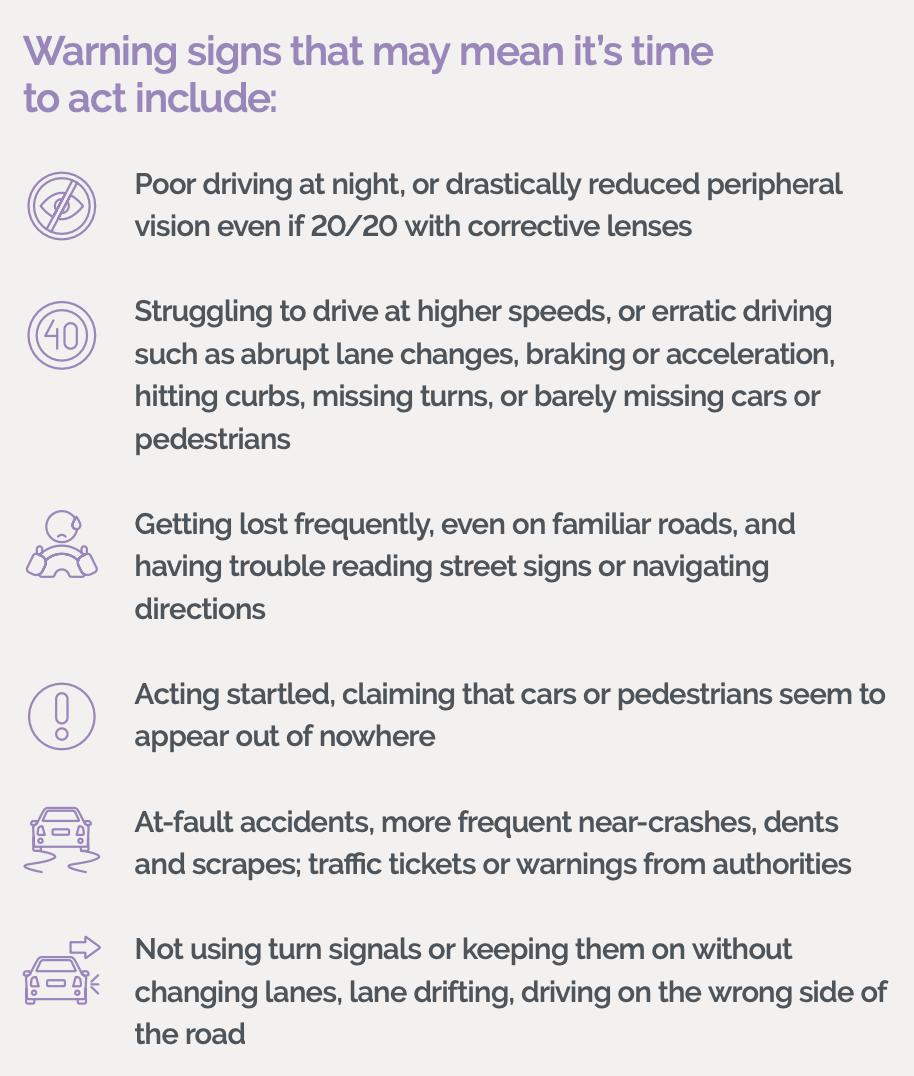
For seniors, driving equals independence and the freedom to go where they want, when they want – even if it is just for weekly grocery shopping and errands. So, when you notice that your loved one is losing their ability to drive safely, it’s essential to discuss it in a non-confrontational way that shows your concern without damaging their pride. Remember, you are not just asking them for their keys; you’re asking them to give up some of their independence.
Give yourself a break.
While you may feel that you can do anything, you can’t do everything. When you accept help and give yourself a break from your caregiving duties, you refresh your mind and body, making you a better caregiver overall.
What is respite care?
For family caregivers, accepting help is a necessity. Even with a strong support system in place, caregivers may sometimes take on too much responsibility to avoid burdening those around them. Respite care offers temporary relief to family caregivers. It can be arranged for an afternoon as part of your weekly routine or for several days a week.
Remove the worry
When caring for others, it’s easy to become overwhelmed. But when you take time for yourself, it’s not always easy to forget your obligations and relax. Respite care can relieve you from your responsibilities while ensuring your loved one is well cared for by a professional caregiver.
Reasons for respite care include:
- Needing to run errands on specific days of the week
- Taking a much-deserved vacation
- Needing to take care of mental or physical health
- Avoiding potential burnout for primary caregivers
- Nurturing your other personal and family relationships
With respite care, you can rediscover the joy you first found in caring for your spouse, parent, or other loved one. Compassionate professional caregivers will take care of your loved one, allowing you to care for yourself and help prevent compassion fatigue.
Respite care provides:
- Professional care for your loved one so that you can take an extended break or vacation
- Activities tailored to your loved one’s interests to engage them physically, mentally, and emotionally while you are away
- Assistance with tasks such as cooking, cleaning, bathing, dressing, and shopping
- Transportation to appointments and events when you aren’t available so your loved one can remain social and active
Communication is key
Starting family conversations
Keeping your family on the same page regarding your loved one’s care can feel like walking a tightrope. Factors such as distance, involvement, interpersonal relationships, and availability can make coordination and conversations challenging. But starting a family conversation is easier than you think.
Division of caregiving responsibilities
Ideally, every family member could give equal time and senior care for their loved one, but issues of distance, work, and family schedules rarely make that possible.
To maintain family harmony, it’s vital that family members:
1. Accept the amount of help that each person can give
2. Let the family member in closest proximity be the care lead
3. Be communicative and share problems when they start, not after they’ve built up
4. Know how to resolve issues with family openly, without talking behind backs
5. Be supportive of each other and acknowledge the strengths each person brings
6. Include your parent or spouse in conversations
Communicating with seniors
Older adults must maintain a sense of independence and autonomy to live their lives to the fullest. This means we talk with seniors rather than speaking to them or for them. We ask questions, listen, and ensure their wants and needs are understood.
Older adults may face communication challenges such as:
- Hearing loss, reduced vision, and other sensory changes
- Generational differences and conflicting personal communication styles
- Cognitive decline and slower information processing
- Health conditions such as stroke, dementia, or Parkinson’s disease
- Environmental factors such as background noise or poor lighting
When communicating with a parent or older loved one, keeping these factors in mind can turn challenging conversations into mutually beneficial experiences that bring you and your loved one closer.
Be kind to yourself as a caregiver.
The act of caregiving is foundational to human existence. It’s our nature to do whatever we can for the people we love most— whether we are parents or children, relatives or friends. When reflecting on their lives, many people feel that caring for others is one of the most emotionally satisfying experiences.
Comfort Keepers® and the Stanford Center on Longevity collaborated to produce a research study on trends in the emotional health of family caregivers. The study found that illness severity was not the leading cause of caregiver compassion fatigue, but rather the caregiver’s inability to pursue their social goals and friendships. This underlines the importance of emotional well-being for family caregivers.
So, although caring for a loved one can be a joyful and rewarding experience, it’s essential to know when you need a break. Taking time for respite and self-care can have a profoundly positive impact on both your well-being and your relationships with loved ones. Sharing your struggle with others, asking for help, and building a solid support system are essential to caring for yourself.
Paying for Care: Evaluating options
Financial concerns can be among the biggest for families when caring for a loved one. Several factors must be considered, including one’s own financial costs, family responsibilities, and career goals.
Depending on your family’s needs, you may only require a few hours a week of personal care or companionship from an in-home care provider, or you may need full-time help. When you start considering care options, questions about costs tend to follow.
Follow these steps to assess your payment options:
- Evaluate your loved one’s savings
- Explore in-home care options based on your needs
- Talk to a financial advisor
- Consider the options to the right
Payment options can include Medicare, Medicaid (if you qualify), long-term care insurance, Veterans Administration benefits, and out-of-pocket (from your savings and assets).
Medicare
It covers long-term care in limited circumstances, such as immediately following a hospital stay. It also covers short-term, physician-prescribed home health care, including skilled nursing, physical therapy, occupational therapy, and speech therapy, as well as medical social services and personal care.
Medicaid and State Programs
Medicaid may cover some in-home care services for those with limited financial resources.
Veterans Administration Aid and Attendance Pension Benefit
Veterans may be eligible for VA benefits to help cover some of the costs of in-home care, and surviving spouses may be eligible for respite care.
Long-term care insurance
Long-term care (LTC) insurance is purchased independently of other insurance policies and helps cover future long-term care expenses. Rates for such policies can vary substantially, with factors such as age and overall health influencing them. The key to saving money and preparing for care is to be proactive.
There are two types of long-term care (LTC) policies. Traditional LTC policies function similarly to auto or home insurance policies. You can make premium payments if the policy is active and file claims if you require the covered services. Another option is to select a policy with a waiting period between when you begin needing care and when benefits become effective, including inflation protection.
This article by AARP highlights the basics of LTC insurance and can help you prepare for a meeting with a consultant or financial agent.
Let's Get Started Today!
What’s next? To help you create a clear path for moving forward, or if you ever have questions or want someone to talk to, please don’t hesitate to reach out. Thank you for taking the time to read our guide. Remember to look for the small moments of joy every day.