

Small Town Care, Big-Time Expertise

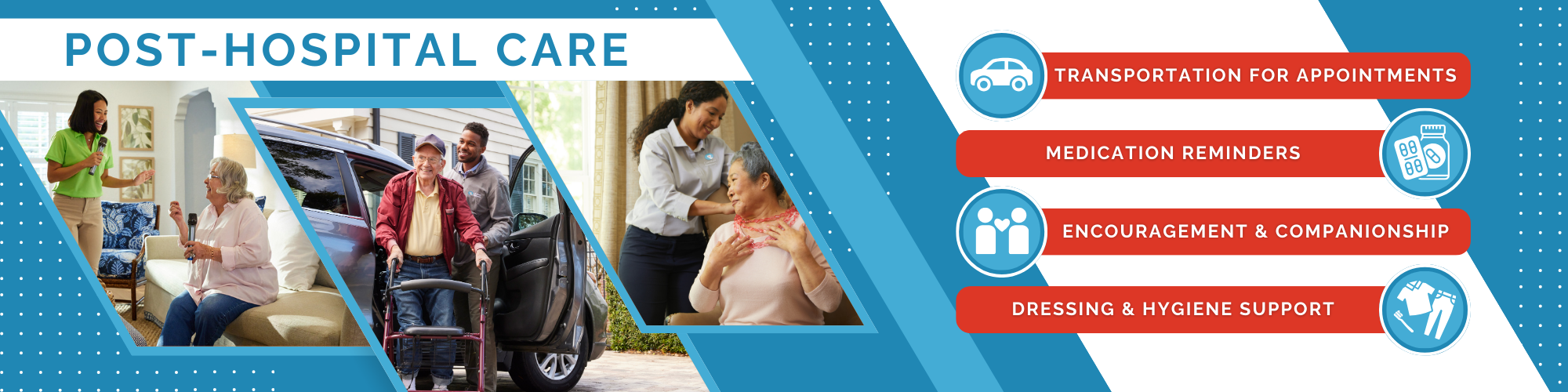
In Gloucester County, we believe recovery happens best when you're surrounded by familiar faces in a place you call home. That might be Pitman or Woodbury, Mullica Hill or Washington Township — places where neighbors know neighbors, where the pace is human-scaled, and where getting out of the hospital doesn't mean getting displaced to a care facility far from everything you know.
Coming home from Inspira Medical Center Woodbury or any of our regional hospitals with a fresh discharge means you need support immediately. Physical recovery is only part of the picture. You need someone you can trust — someone from the community — who understands what you're going through and helps you navigate those critical first weeks at home with confidence and skill.
Whether your elderly loved one is being discharged from Inspira Medical Center or Kennedy Health, our post-hospital senior care ensures a smooth transition home. Families in Pitman, Glassboro, Woodbury, Deptford, Turnersville, Gloucester Township, West Deptford, and Sewell trust our elderly care team to be there from the moment their loved one walks through the door — reducing readmission risk and supporting a faster, safer recovery with experienced in-home senior care.
Comfort Keepers: The Trusted Care Provider Gloucester County Families Depend On
We're not a national chain with a toll-free number routed to another state. We're the home care provider that Gloucester County families have trusted for years — the one that hospitals call first because they know we'll show up and get it right. When you're discharged from Inspira Woodbury or Inspira Mullica Hill, coordinating your care with Comfort Keepers is straightforward because we're already woven into the healthcare community here.
When you call, a team member starts working on your case immediately—scheduling begins the same day you reach out. Before services start, we conduct a nurse assessment to understand your specific medical situation and build a care plan that actually fits your needs, not a cookie-cutter approach. For most families, full care services begin within about a week of the initial call, covering the nurse assessment, caregiver matching, and care plan preparation. If there is an urgent need—such as needing someone at the hospital or immediate safety support—we work to arrange that as quickly as possible. Call (856) 582-1054 as soon as you have a discharge date in mind.
The First 72 Hours Matter Most — Here's What Our Care Includes
The immediate post-discharge period is when most complications surface, when medication errors happen, and when families need the most reassurance. Our caregivers are trained to manage this critical window with skill and attention.
Medication Oversight: We organize your prescriptions, remind you on schedule, track doses taken, and monitor for side effects or interactions.
Health Monitoring: We watch vital signs, listen for changes in your breathing or energy, notice swelling or pain patterns, and report anything concerning to your doctor.
Physical Assistance: Bathing, dressing, moving safely — we provide the hands-on help your body needs while you're still tender and healing.
Surgical Site Care: Bandages, drains, incisions — we keep them clean, protected, and monitored for signs of infection.
Appointment Liaison: We transport you to follow-ups, bring medical notes from home, and help your doctor understand how recovery is progressing.
Nutritional Support: We prepare appropriate meals that match any dietary guidance from your discharge papers.
Home Organization: Clean, safe living spaces aren't luxuries — they're part of healing. We keep your recovery area orderly and welcoming.
This is how we support families through those crucial first days when everything feels uncertain and overwhelming.
Recovery Unfolds in Stages — We Adjust Our Care Accordingly
The Hospital Discharge Moment
Before you step out of the hospital, make sure you have clear answers: What medications start today? Which movements are forbidden? What does 'limited activity' actually mean for me? What warning signs require calling 911 versus my doctor? When is my first follow-up appointment? If a Comfort Keepers caregiver is present for discharge, they'll ask these questions alongside you and take notes so nothing gets lost.
Settling In at Home
Your first hours back involve orientation to a recovery routine. Your caregiver arrives, gets to know your home and your personality, reviews all the hospital paperwork with you, makes sure you're comfortable and positioned safely, and establishes consistent visit times. You're not just getting a stranger in your house — you're getting someone who will know you and your needs deeply over the coming weeks.
The First Seven to Ten Days
By the end of your first full week at home, a rhythm should be forming. Your caregiver knows what you prefer, what works and what doesn't, what makes you more comfortable. Your first doctor's appointment has happened. You're starting to trust that you're going to heal. The panic is lifting. Families tell us they can finally breathe again.
We Specialize in Post-Hospital Recovery — Every Condition Has Unique Needs
Hospital stays happen for different reasons, and each reason brings different care demands. We're experienced across the range.
Fall Recovery and Fracture Care
Falls are the most common reason we see Gloucester County residents arriving at Inspira or transferring from other hospitals for post-acute care. A broken hip, a fractured arm, head trauma — these injuries require careful monitoring and deliberate physical rehabilitation. Our caregivers understand fall recovery because we see it frequently. We know how to help someone move safely when they're afraid of falling again. We know when immobility is needed and when gentle movement aids healing. We're present to prevent another fall while you're still fragile.
Cardiac Event Recovery
Heart attacks and cardiac interventions change how a patient approaches recovery. The months afterward require steady monitoring and gradual return to activity. Our caregivers work with cardiology teams to enforce activity restrictions that feel limiting but are necessary. We watch for warning signs — chest discomfort, unusual shortness of breath, edema — and know exactly when to alert the cardiologist. We also encourage the activity that supports recovery when it's appropriate to do so.
Joint Replacement Recovery
Whether it's a knee, hip, or shoulder replacement, success depends on physical therapy compliance in the first month at home. Our caregivers support prescribed exercises, help patients move safely on stairs and in and out of chairs, ensure the home is arranged to prevent re-injury, and keep up with pain management routines.
Stroke and Neurological Recovery
Neurological recovery is individual and often long. Our caregivers understand that progress is not linear, that frustration is normal, and that consistent, patient support matters tremendously. We help with mobility challenges and communication difficulties while encouraging the independence that healing requires. For patients dealing with cognitive changes or memory concerns alongside their recovery, our team is trained in Positive Pathways—Comfort Keepers’ dedicated approach to dementia and cognitive care. This program focuses on maintaining dignity, establishing predictable routines, and using purposeful activities to keep the mind engaged during what can be a disorienting period.
Post-Surgery General Care
General surgical procedures — appendectomy, hernia repair, organ procedures — all require wound care, infection prevention, pain management, and gradual activity increase. We manage the details so you can rest.
We Partner Directly With Inspira and Jefferson Hospitals
Comfort Keepers has built professional relationships with the discharge planning teams at hospitals throughout Gloucester County and beyond. We coordinate timing, share medical information, and ensure a smooth transition from hospital to home — all before you leave the building.
Hospitals We Serve
Inspira Medical Center Woodbury
Inspira Medical Center Mullica Hill
Inspira Medical Center Elmer
Jefferson Washington Township Hospital
Post-Acute Care Facilities We Coordinate With
Pitman Manor / United Methodist Communities at Pitman
Atrium Post Acute Care of Woodbury
Advanced Subacute Rehabilitation Center at Sewell
Deptford Center for Rehabilitation and Healthcare
Center for Rehabilitation and Nursing at Washington Township
Shady Lane (Clarksboro)
Our Rapid Response: How We Get Care in Place Efficiently
We can coordinate fast because we’re positioned right here in Gloucester County with caregivers ready to take new assignments. When you call, there is no answering service—a real team member answers and starts scheduling your care right away. We do not need to recruit or vet someone new when you call—we’re ready. We have formal relationships with hospitals so discharge planners contact us directly. The important step that happens before care begins is a nurse assessment—this visit lets us understand your specific medical situation and build a care plan that truly fits. For most families, the complete care program is running within about a week of first contact, once the assessment, caregiver matching, and preparation are complete.
Call the moment a discharge date is set. Even if it’s weeks away, getting on our radar helps us plan. We’ll ask what you need, confirm we can meet those needs, start building your care file, and be ready when you come home. If there is an urgent situation—needing someone at the hospital or immediate safety monitoring—let us know and we will work to arrange support as quickly as possible. We also offer live-in care, where a caregiver stays in the home around the clock rather than working in shifts. For post-hospital recovery, this can be the best option—your loved one gets uninterrupted support day and night, and you avoid the adjustment of meeting different caregivers at different times.
What Medicare Covers—And What It Doesn’t
Families ask us constantly: “Won’t Medicare cover this?” It’s a fair question, and the answer matters for planning your recovery support.
Medicare's home health services provide skilled nursing and physical therapy — but only for a limited time (typically up to 100 days after a qualifying hospital stay), and only if your doctor prescribes them as medically necessary. Once Medicare services end, you're on your own for support. Additionally, Medicare explicitly does not cover personal care: helping with bathing, dressing, grooming, meals, medication reminders, housekeeping, companionship, transportation.
This is where Comfort Keepers comes in. We provide the personal, non-medical care that Medicare does not cover. If your loved one has a Medicare home health nurse visiting a few times per week, we are there the rest of the time—ensuring continuity, safety, and comfort. Our services are paid through long-term care insurance, VA benefits, or private pay—not through Medicare.
Making Recovery Care Affordable for Gloucester County Families
We know that cost is real, and it's a factor in family decision-making. We're transparent about pricing and flexible about payment options.
Long-Term Care Insurance: If you have a policy, we can verify your benefits and confirm what your coverage will pay for post-hospital care. This is the most common way families pay for our services.
Veterans Benefits: If you or your loved one served, Aid and Attendance benefits through the VA can help cover the cost of home care during recovery.
Private Pay: Many families choose direct payment for short-term recovery—a practical option for a few weeks or months. We offer flexible scheduling to work within your budget.
Why Gloucester County Residents Choose Comfort Keepers
Pitman is a tight-knit community, and word gets around about which services actually care about people and which are just collecting a check. Comfort Keepers has earned trust here because of how we show up.
We're Local, and We Act Like It
When you call, you're not reaching an out-of-state customer service center. You're talking to someone who knows Pitman, who knows the local hospitals, who understands Gloucester County's healthcare system. We've been here. We're staying here. We care about our community's reputation because we live in it.
Hospitals Know Us and Trust Us
Discharge planners at Inspira Woodbury, Inspira Mullica Hill, and the other facilities we partner with call us first because they know we deliver. They know our caregivers are trained, reliable, and professional. This means coordination happens quickly and smoothly, and patients benefit from seamless transitions.
Our Caregivers Are Professional But Also Compassionate
Every Comfort Keepers caregiver completes training in post-hospital care. We screen backgrounds and verify references. We provide ongoing education. This is not casual care—it’s professional service built on caregiver continuity and our Interactive Caregiving philosophy. We work to keep the same caregivers assigned to your case, so even if you need multiple shifts, familiar faces show up each time. That means our caregivers do not just handle tasks for you—they find ways to involve you in your own recovery. Maybe that’s helping prepare a simple meal together, walking to the mailbox and back, or working through a crossword puzzle to keep the mind sharp. This approach keeps you active, engaged, and progressing—and it’s what makes recovery with Comfort Keepers feel like partnership, not dependency. Your caregiver will know you as a person, not just a client.
You Get a Real Coordinator, Not an Algorithm
Your care is managed by a dedicated coordinator—someone who knows your family, understands your situation, and actively oversees your recovery plan. If something isn’t working, you do not navigate a website or an app. You call and a real team member answers—no answering service, no phone menu. You talk to someone who knows your case and can act on it right away.
How Home Care Reduces Hospital Readmission Risk
Readmission within 30 days of discharge is costly and often preventable. Research consistently shows that patients receiving in-home support have lower readmission rates than those going it alone. Here's why caregiving helps:
Medication errors get caught. Someone watching you knows if a dose is skipped or doubled.
Early warning signs get reported. Swelling, fever, new pain, shortness of breath — a trained caregiver recognizes these and alerts the doctor before they escalate to ER-level problems.
Appointments happen. With support for transportation and reminder prompts, patients don't forget or miss the checkups that catch problems early.
Wounds stay protected. Infection prevention is methodical when a caregiver is present.
Isolation is prevented. Having someone there to talk to, to encourage movement, to provide purpose — these are protective factors in recovery.
How One Family Navigated Fall Recovery
"My mother took a fall at home and landed in the ER at Inspira Woodbury with a fractured hip and head injury. After surgery and a few days of observation, she was discharged with strict restrictions: no weight-bearing on that leg for weeks, careful monitoring for infection, physical therapy to start immediately, and honestly, I was terrified I couldn't keep her safe."
"The discharge planner mentioned Comfort Keepers and said they could have someone starting care within hours. A woman named Maria came to our house and immediately I felt better. She understood fall recovery. She didn't just follow instructions — she anticipated what could go wrong and prevented it. She helped Mom with physical therapy exercises even when Mom wanted to skip them. When Mom spiked a fever one evening, Maria recognized something might be wrong and got her to urgent care quickly. But mostly, Maria was just present. Mom had someone to talk to who wasn't her exhausted daughter."
"My mom recovered beautifully. No readmission, no complications, no setbacks. She was walking with a cane within a couple of months. I truly believe Maria made that possible. Not just medically, but emotionally. Mom knew someone was looking out for her, and that mattered as much as the practical help. Maria became part of our family. I recommend Comfort Keepers to everyone I meet who's struggling with a parent's recovery."
— Sandra R., Woodbury
Starting with Recovery, Staying for the Long Run
In Gloucester County, many of our longest-running client relationships started with a hospital discharge. A family needed help for a few weeks. Their loved one healed, but the caregiver had become part of the routine—someone who knew when Dad liked his coffee, how he preferred to get up from the chair, and which exercises the therapist wanted him to keep doing. Letting that go did not make sense. So the family kept going, and what started as temporary recovery care became a permanent aging-in-place arrangement. Your loved one stays in the home they know, surrounded by the community they belong to, with support that grows alongside their needs. That is the path most families here choose—and we make the transition effortless.
From Wenonah and Grenloch to Harrisonville, Newtonville, Ewan, Monroeville, and Richwood, our post-hospital caregivers serve families throughout Gloucester County and beyond. No matter where you live in our service area, Comfort Keepers can coordinate discharge planning and have a trained caregiver in your home the same day — so your loved one's recovery starts strong and stays on track.
Questions Families Ask About Post-Hospital Care
When should I call about home care if my parent is still in the hospital?
Call now, even if discharge is days or weeks away. Early coordination helps us prepare, coordinate with the hospital, and make sure we have the right caregiver available when you need it.
Who comes to the house on the first day after discharge?
A caregiver trained in post-hospital recovery. Before they arrive, your care coordinator will have briefed them on your medical situation, discharge instructions, medications, and any special needs. They won't be a stranger showing up without context — they'll be prepared and professional.
How soon after discharge from Inspira or Jefferson can care begin?
Scheduling starts the day you call us. A nurse assessment is conducted before services begin to ensure the care plan is tailored to your needs. Most families have their full care program running within about a week. For urgent situations, we can arrange support faster. Call as soon as your discharge date is confirmed, and we’ll coordinate with the hospital’s discharge planner to ensure a seamless transition.
Who pays for post-hospital home care in Gloucester County?
Most families pay through long-term care insurance, VA benefits, or private pay. If you have a long-term care insurance policy, we verify benefits and handle the paperwork. Veterans may qualify for Aid and Attendance benefits. Private pay is a practical option for short-term recovery. We’ll help you explore which options apply to your situation and verify coverage before care begins.
When should families consider home care instead of going to a rehab facility?
Some patients benefit from short-term facility care followed by home care. Others go straight home with caregiver support. It depends on medical complexity, family support available, home accessibility, and personal preference. We can help you think through what makes sense for your situation.
Who coordinates between the hospital, Medicare, and Comfort Keepers?
Your care coordinator at Comfort Keepers. They talk to the hospital discharge planner, verify insurance coverage, brief your assigned caregiver, and manage the overall plan. You have one main contact who knows your situation fully.
When does temporary post-hospital care turn into ongoing home care?
That's flexible and depends on your recovery and needs. Some families need us for a few weeks, others for months, others transition into long-term care. There's no rigid timeline — we adjust as your situation changes.
Start Your Recovery With a Call to a NeighborWhether you need care for a week or for the long term, we are here. If someone you love is being discharged from the hospital soon, call Comfort Keepers. Let's talk about what's ahead and how we can support your recovery journey. www.comfortkeepers.com |
Nurse-Led Post-Hospital Transition Planning in Pitman
The transition from hospital to home is one of the most critical moments in a senior's recovery. At Comfort Keepers of Pitman, our Registered Nurse can meet your family right at the hospital or rehab facility — coordinating directly with discharge planners at Inspira Medical Center Woodbury, Inspira Medical Center Mullica Hill, and Jefferson Washington Township Hospital to develop a post-discharge care plan before your loved one comes home. The RN conducts a home safety assessment before arrival, ensuring the home is ready for recovery. Once home, the nurse checks in every 30 days, develops a new plan of care every 60 days, and can attend follow-up doctor’s appointments to ensure recovery stays on track. This nurse-led coordination helps prevent hospital readmission — one of the biggest risks facing seniors after discharge.







