

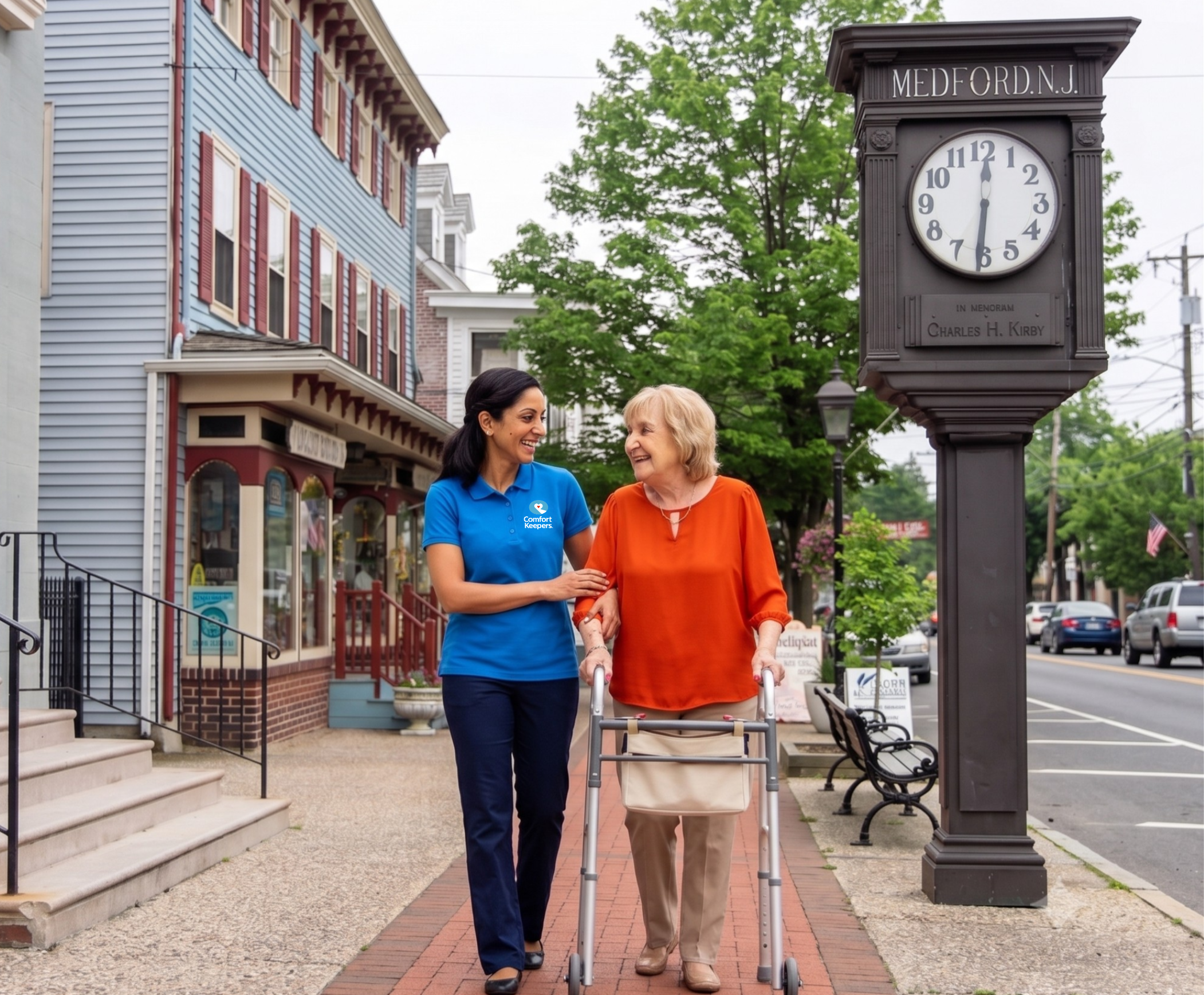
A Medford Family’s Guide to In-Home Senior Care
Most families do not go looking for home care until something changes. A parent comes home from the hospital and the house suddenly feels too big. A father who always drove himself stops offering to. A daughter visits and notices the mail is piling up and the fridge is nearly empty. One family we talked with had already toured a facility after their mom broke her hip. The son told us he left the tour feeling low. Part of him felt like he was signing his mother up for a sentence. What he really wanted was permission to keep her home.
That is what in-home care is for. It lets an older adult stay in the house they know, on their own schedule, with help for the parts of the day that have gotten hard. In Medford, that might mean a caregiver a couple mornings a week to start, or someone there most of the day as needs grow. You decide how much. You can add more or pull back as things change.
What in-home care looks like in a Medford home
It is simpler than most people picture. A caregiver comes to the home and helps with the ordinary things that keep a day running. Getting up and dressed. A shower, safely. Breakfast made and the kitchen wiped down. A ride to a doctor at Virtua Marlton or to the pharmacy and back. A load of laundry. A walk when the weather is good.
A lot of it is company, too. Someone to talk to, play cards with, or sit with over coffee. We call that companion care, and families are often surprised by how much it matters. That company is not a small thing. The CDC links social isolation in older adults to about a 50 percent higher risk of dementia and a 29 percent higher risk of heart disease. A parent who was quiet and withdrawn perks up when there is a friendly face in the house a few days a week. When the help involves hands-on tasks like bathing, grooming, and getting to the bathroom, we call that personal care. Most families end up with some mix of both.
The point of all of it is not to take over. It is to help your loved one keep doing the things they can still do, and give them a hand with the rest. They stay independent longer because someone is there to make the day safe.
Why families here start looking
Most of the people who call us want the same thing their parent wants. To stay put. In AARP's 2024 Home and Community Preferences Survey, 75 percent of adults 50 and older said they want to remain in their current home as they age. That number tracks with what we hear on the phone every week.
Staying home is not only what people want. It is often where they do better. In a large study of older adults recovering from a hip or knee replacement, the ones who went straight home came through with fewer complications and fewer trips back to the hospital than the ones sent to a facility first. Home health patients were readmitted at a rate of about 5 percent, compared with roughly 12 percent for those who recovered in a nursing facility. Home is familiar. People tend to sleep better, move more, and eat the food they know.
The good part is that people are living longer. The hard part is the same. Living longer often means needing a little help along the way. The moment a family reaches out is usually a small one, not a crisis. A spouse who has been doing all the caregiving is worn out and needs a break. A parent living alone is lonelier than they let on. Someone came home from a stay at Virtua Mount Holly and the first few weeks back are the shaky ones, when a person is most vulnerable and a fall is most likely.
None of those moments require a big decision. They just require a conversation.
You do not have to start with a lot of help
Families often think home care is all or nothing. It is not. A good place to start is small. Twice a week, a couple hours, so your parent gets used to a new face and you get to see how it feels. From there you can build up if you need to.
Starting small also lets us learn your loved one before anything gets complicated. What they like. What they will accept help with and what they would rather do themselves. What makes a good day for them. That knowledge is worth a lot when needs grow later.
The obvious answer is not always the right one
Years ago we got a call from a 91-year-old man whose wife had dementia. She had just finished a stay at Cambridge Rehab in Moorestown, and the family assumed the next step was a facility. He wanted to try keeping her home first.
We came out and looked at the whole picture, and a live-in caregiver turned out to be the right fit. She did so much better at home than anyone expected. Some nights the two of them would dance together in the living room. That caregiver stayed with the family for eight years.
If they had gone with the answer everyone assumed was obvious, those eight years, and those dances, would not have happened. That is why we always say to have us come look before you decide anything. Never pre-determine what you have to do. It costs nothing to find out, and the right plan is often not the one you walked in expecting.
How care gets set up
The first call is a real conversation, not a sales pitch. Kyra, who handles our intake, usually answers it. She listens, asks the right questions, and there is no charge for any of it. After the no-cost consultation she sends the family a written preliminary plan based on what you described, so you have something in hand before you commit to anything.
Once care starts, you have one main point of contact, your Client Care Coordinator. They are the person who schedules the caregiver, checks that the match is working, and handles it when something needs to change. Our Director of Nursing, a registered nurse, writes the plan of care and keeps it current as needs shift. When a family stays in touch with their Coordinator, the care goes well. That relationship is the whole engine.
We will not pretend the first caregiver is always a perfect fit. When something feels off, our Coordinator and our nurse talk with the caregiver first, tell them what is going well and what to adjust, and work to make it right. We would rather do that than run a revolving door of new faces through your parent's home. If it truly is not the right match, we find a caregiver who is.
We do not print prices in an article because the number really does depend on your situation, how much help, what kind, and how often. But we will give you a cost over the phone. Call us and we will talk it through based on what your family actually needs.
Around Medford and beyond
Our caregivers serve Medford and the towns around it, including Marlton, Mount Laurel, and Moorestown. They know the area. They know the run to Virtua Marlton and the drive up to Virtua Mount Holly. The care is local, and so are the people giving it.
I have seen what it does for a person to stay in their own home with the right help. They keep their routines, their neighbors, the chair by the window they like. Our work is to elevate the human spirit, and it starts with a simple question about your loved one: what still brings them joy, and how do we protect it?
My staff and I are happy to have that conversation any time. Call Comfort Keepers of Cherry Hill at (856) 857-6120. We have these talks all day long, and there is no obligation to use us.
Questions families ask about in-home care
Does Medicare pay for in-home care?
Usually not for the ongoing help most families want. Medicare coverage is typically temporary, around 28 days and only a few days a week, tied to a medical need after a hospital stay. The kind of daily support we provide is private pay. Many families use long-term care insurance, and we also work with veterans and surviving spouses who qualify for the VA Aid and Attendance benefit. We do not accept Medicaid or state waiver programs.
How many hours do we have to start with?
As few as you want. A lot of families start with a couple of hours, twice a week, and build from there. There is no minimum you have to commit to before you have even met the caregiver.
What is the difference between companion care and personal care?
Companion care is help with the day and with company, meals, light housekeeping, errands, rides, and conversation. Personal care adds hands-on help with things like bathing, dressing, grooming, and getting to the bathroom. Most families end up with a blend, and the mix can change over time.
How do you match a caregiver to my parent?
Your Client Care Coordinator matches based on what your loved one needs and who they are, not just the schedule. If the fit is not right at first, we work with the caregiver to improve it before we ever swap anyone. The goal is to get it right and avoid a parade of new faces through the home.
How do we get started, and what will it cost?
Call us for a no-cost consultation. We will talk through your situation and give you a cost over the phone. If you want to move forward, we send a written preliminary plan and set up a visit. If you do not, there is no obligation.







