

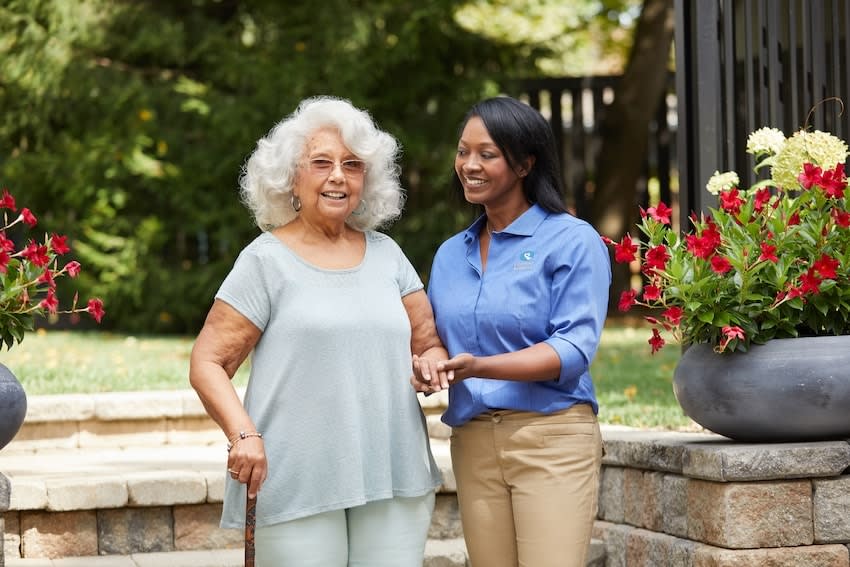
Moving to an assisted living community can give a senior access to a supportive environment, convenient services, and opportunities to connect with other residents. Even with those benefits, there may be times when a senior would benefit from more individual attention than the community is designed to provide.
Additional one-to-one care does not replace the services or staff at an assisted living community. It adds personalized support centered on one resident’s routines, interests, and daily needs. At Comfort Keepers® of Hudson, we can work alongside a community’s existing team to provide companionship and personal care based on an individualized plan.
Assisted Living and One-to-One Care Serve Different Roles
Assisted living communities support many residents throughout the day. The exact services vary by community, but staff members generally balance scheduled responsibilities, resident requests, activities, meals, and other needs across the building.
One-to-one care is different because the caregiver’s time is dedicated to a single resident during the scheduled visit. That arrangement can create more time for unhurried conversation, help with a familiar routine, personal care, or participation in an activity the senior enjoys.
The two forms of support can complement one another. Community staff continue to perform their established responsibilities, while a Comfort Keepers caregiver focuses on the needs included in the senior’s personalized care plan. Any service must be coordinated with the community and follow its policies.
When Additional Support May Be Helpful
A senior does not necessarily need to be in crisis to benefit from added support. A change in routine, increased need for assistance, or reduced participation in daily life may prompt a conversation.
For example, additional one-to-one care may be worth considering when a senior:
- Spends much of the day alone or rarely joins community activities
- Would enjoy regular conversation and individual companionship
- Needs more time completing a morning or evening routine
- Benefits from reminders and encouragement throughout the day
- Needs help with bathing, grooming, dressing, toileting, or mobility
- Is living with Alzheimer’s disease or another form of dementia and responds well to familiar routines
- Has recently returned from a hospital or rehabilitation stay
- Has a spouse or adult child who has been providing frequent support and needs help sharing those responsibilities
These situations do not automatically mean that a particular schedule or service is appropriate. They are reasons to look more closely at what has changed and where additional help might fit.
Wondering if one-to-one care is right for your loved one?
Call (715) 381-6730 Request a Free Consultation
What Can a Comfort Keepers Caregiver Do in an Assisted Living Community?
The right support depends on the senior, the community’s policies, and the services we are able to provide in that setting. A personalized plan may include companion care, personal care, or a combination of both.
A caregiver might spend time talking with the senior, looking through photographs, reading, playing a favorite game, or accompanying the resident to an activity within the community. For someone who has become less engaged, having a familiar person arrive for a scheduled visit may make it easier to participate in something they once enjoyed.
Care may also include help with daily routines. Depending on the plan, our Comfort Keepers caregivers can assist with grooming, dressing, toileting, mobility, or other personal care needs. They may also accompany the senior to an appointment or outing when transportation and accompaniment are part of the arranged services.
We call our approach Interactive Caregiving™. Instead of treating care as a checklist, our caregivers look for appropriate ways to involve the senior in the day. That might mean choosing an outfit together, walking to a community activity, sharing conversation during a routine, or encouraging the senior to take part in an interest that remains meaningful to them.
The goal is not to take over tasks a senior can still do. It is to provide the right amount of assistance while supporting participation, connection, and independence.
How One-to-One Care Can Support Family Involvement
Adult children and spouses often remain closely involved after a senior moves to assisted living. They may visit regularly, help with personal routines, attend appointments, or call the community to check in. That involvement can be meaningful, but it may become difficult to manage alongside work, travel, health concerns, or other responsibilities.
Scheduled one-to-one care can help fill specific gaps without reducing the family’s role. A caregiver may visit on days when a family member cannot be present, help the senior prepare for an appointment, or provide companionship during a part of the day that has become difficult.
When authorized and appropriate, communication can also help the people involved in the senior’s care stay informed. Before services begin, we can discuss how updates will be shared, whom the caregiver should contact with a concern, and how our team will coordinate with the community’s staff.
Clear roles matter. The community, our team, healthcare professionals, and family members may each have different responsibilities. Establishing those boundaries at the beginning helps everyone understand the purpose of the additional care.
Questions to Ask Before Arranging Additional Care
Before bringing an outside caregiver into an assisted living setting, it is important to speak with both the community and the home care provider. Helpful questions include:
- Does the community allow outside caregivers, and are there check-in or documentation requirements?
- Which needs are already addressed by the community?
- Where does the senior need more individual time or assistance?
- What days or parts of the day are most difficult?
- Which activities, routines, and interests are important to the senior?
- How will the caregiver communicate with the family and community staff?
- Does the senior need companion care, personal care, or another type of support?
The answers can help define a clear role for the caregiver. They also make it easier to create a schedule based on actual needs instead of assuming that more care is always better.
A Personalized Plan Can Change Over Time
A senior’s needs in assisted living may not remain the same. Someone may initially want a caregiver for companionship once or twice a week. Later, the plan may need to include personal care, more frequent visits, or support at a different time of day.
Changes in mobility, cognition, daily habits, or family availability can all affect the care arrangement. Regular communication gives the family and care team an opportunity to discuss what is working and whether the plan should be adjusted.
This flexibility is one reason to focus on the person rather than a fixed package of tasks. The most useful plan is one that reflects the senior’s present routine while leaving room for thoughtful changes.
Learn About In-Facility Care in Hudson and the St. Croix Valley
A move to assisted living does not eliminate the value of individual companionship and personalized assistance. For some seniors, additional one-to-one care can provide time, consistency, and support centered on the way they prefer to live each day.
At Comfort Keepers of Hudson, we provide in-facility care for seniors in assisted living, independent living, retirement communities, rehabilitation settings, and other care environments. We plan services around the senior’s needs and coordinate with the community when appropriate.
To discuss what additional support could look like for a senior in Hudson or the surrounding St. Croix Valley, call us at (715) 381-6730 or contact our team. We can learn about the current situation, explain available services, and help determine an appropriate next step.







