

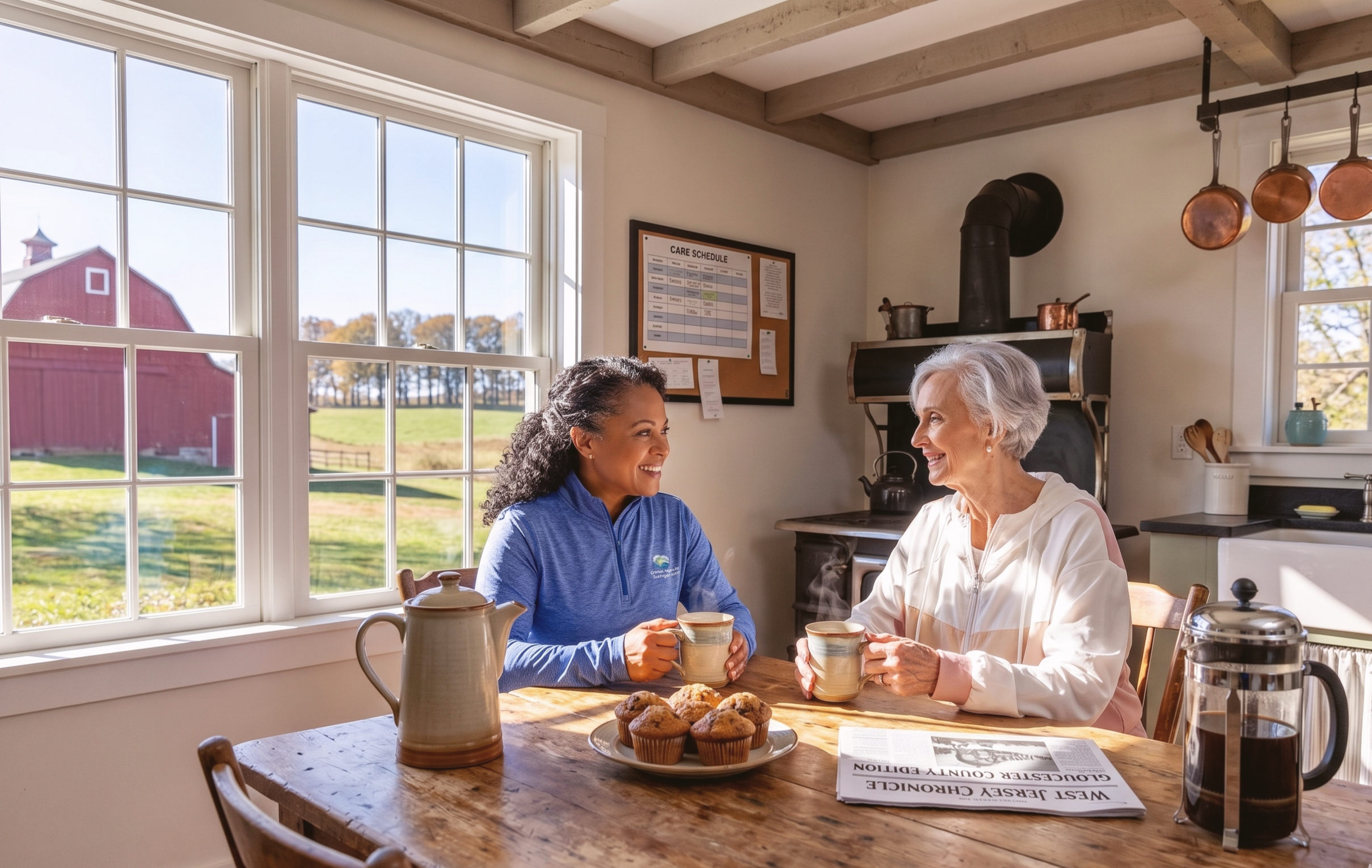
For about four years, we went to a woman's house in West Deptford for two hours every other day. Our caregiver helped her shower, got her meals ready, and put her to bed in the evening. It worked well for a long time.
Then she started to get older, and we started to notice things when we came in. Her clothes weren't being washed. Things around the house weren't getting done. She was very lonely.
We sat down with the family and talked about the options: assisted living, or staying in her home with a live-in caregiver. She did not want either one. Our nurse, Lynn, talked with her and got her to agree to try a live-in. She said she would do it for three weeks, and that was it.
That was a year ago. She is still home, she is doing really well, and she is happy.
Most of our live-in clients don't start with live-in. They start with a few hours a week, and we step up the care when the hours stop being enough.
What live-in home care is
Live-in home care is one caregiver who stays in the home and helps with daily life, every day. She helps with bathing, dressing, meals, laundry, medications and getting around the house. She is also company, all day long.
Every live-in we send is a Certified Home Health Aide (CHHA), licensed by the State of New Jersey. She needs her own room or a private area to sleep. The family provides her food, or pays a meal stipend.
Breaks (off duty) and sleep
A live-in takes breaks (off duty) during the day and sleeps at night. We look out for our caregivers so they can look out for you. A caregiver who doesn't sleep isn't safe for anybody.
The schedule
A live-in stays a minimum of 7 days to start. Most work about six weeks, then take a few days off while a relief caregiver comes in. Then she comes back.
When a few hours a week stops being enough
Hourly visits work until the hours in between start to matter. Our caregivers are often the first to see it, because they are in the house every week. In West Deptford, it was the laundry, the house, and how lonely she had become.
Things we watch for
Laundry piling up. Food going bad in the fridge. Mail not opened. Pills that don't match the day of the week. A house that used to be neat and isn't anymore.
Loneliness counts
In 2024, 33% of adults age 50 to 80 said they felt lonely some of the time or often, according to the University of Michigan National Poll on Healthy Aging. A live-in means someone to talk to at breakfast and again at dinner.
When we see these things, we call the family. Nobody has to decide on the spot. We lay out the options and what each one costs.
Assisted living or a live-in?
Many Gloucester County families use live-in care in place of assisted living or a nursing home. A live-in runs in a similar monthly range to a New Jersey nursing home. The difference is that the person stays in their own home, with their own things, in the town they know.
If you are weighing the two, read home care vs. assisted living. There are very few cases where we can't keep someone at home. There is nothing like one-on-one care.
When she says no
Almost everyone says no at first. Nobody wants a stranger in the house. In West Deptford, the answer was a short trial and a conversation with our nurse instead of with her children.
Lynn Guice, RN, has more than 30 years of nursing experience. She can sit at the kitchen table and explain what a live-in does and doesn't do. It often goes better coming from someone who isn't family.
Who else live-in care fits
Coming home from the hospital
After a stay at Inspira in Mullica Hill or Jefferson Washington Township, a live-in can cover the first weeks at home. Then we can step down to post-hospital care a few hours a day.
Dementia
The same caregiver keeps the routine steady. If nights are hard, we add an hourly caregiver overnight, which still costs less than 24-hour shifts. See our dementia care page.
Couples
One live-in can often help a husband and wife together. We look at what each of them needs first.
Hospice and the end of life
Hospice visits, but it does not stay. A live-in fills the rest of the day. See our end-of-life care page.
What it costs and how families pay
A live-in costs much less than caregivers awake in shifts around the clock. Compared with a New Jersey nursing home, it runs in a similar monthly range. Call us and we'll give you a cost for the situation.
Families pay with private funds, long-term care insurance, and for many veterans and surviving spouses, the VA Aid and Attendance benefit. Medicare does not pay for a live-in. It covers short-term skilled care, like a nurse or therapist visiting for a few weeks.
Questions families ask about live-in care in Gloucester County
Can we go from a few hours a week to live-in care?
Yes. Many of our live-in clients started with hourly visits. We'll plan the change with you.
How do we know it is time for a live-in?
When things at home start slipping between visits: laundry, meals, pills, or loneliness. Our caregivers and nurse will tell you what they see.
She only agreed to three weeks. Is that allowed?
Yes. The minimum to start is 7 days. A short trial is how a lot of our longest live-ins began.
Is a live-in the same as 24-hour care?
No. A live-in is one caregiver who sleeps at night. 24-hour care is caregivers awake in shifts, and it costs much more. See our 24-hour care page.
Does Medicare pay for live-in care?
No. Medicare pays for short-term skilled care, not a caregiver who stays in the home. Long-term care insurance and VA benefits can help.
What towns does the Pitman office serve?
We serve Gloucester County, including West Deptford, Mullica Hill, Woodbury, Pitman, Glassboro, Sewell and Washington Township.
Try it before you decide
Call the Comfort Keepers Pitman office at (856) 582-1054. We'll talk about what has changed and whether a live-in could keep her at home.
Learn more about respite care and home care in West Deptford.







